The Gift of Teaching Others How to Pray

36116-womanpraying-bible-pexels-1200w-tn

For me, prayer is a surge of the heart; it is a simple look turned toward heaven, it is a cry of recognition and of love, embracing both trial and joy.

—St. Therese of Lisieux

I just love the different people I encounter at adoration on any given day.

Just the other day, as I was praying the rosary, a woman in the row of seats next to me seemed restless. She kept getting up and going to the back of the chapel to get some books. She didn’t seem to comfortable just sitting there and looked like she needed something to read.

As I went on with my rosary, the woman asked, “Excuse me, but do you have the Our Father over there by you?”

I rummaged through my bag o’ books and had to laugh: Of all the prayer cards and books I have on me at any given time, how could I not have the Our Father, the most common prayer?!

I apologized for not having it handy but then informed her it was in the Bible. (Matthew 6 for future reference.)

She had no idea and was so grateful that I mentioned this to her.

I went back to my rosary but couldn’t help think: “How sad that this person didn’t  know the Our Father!”

And then I realized the hard truth: There’s no prayer in public schools anymore. There’s no prayer on tv. There’s no one praying out in the open for fear of being sued or ridiculed. So why should I be surprised that this middle aged woman didn’t know the most common prayer in history?

If I hadn’t been raised Catholic I may not know the Our Father, either. But I also didn’t start really praying from the heart until a couple years ago. I started seeing people sincerely speak words from their heart, as they would pray either over me or with me or even before a meal and I thought, “I gotta step up my prayer game. These people are professionals!”

There’s lots of books on contemplative prayer, and meditative prayer and repetitive prayers, novenas, chaplets, devotions, etc. It can seem overwhelming if your goal is just to learn how to pray everyday.

I’m no expert but I thought, if I were to try to help someone learn how to pray, here’s what I would suggest:

Books to Pray With

Two books by Jacques Philippe are great recommendations:

Time for God  And his follow-up book is called Thirsting for Prayer

Both books are under 150 pages, which is why I like them so much. Sometimes I think we say we don’t have time to read about how to pray, but we do. We just have to make the time. And these books can easily be read in a couple of days.

Meditation and Contemplation

There’s also a great way to pray with scripture called Lectio Divina. I’m not too great with this. My poor Spiritual Director had suggested it to me and I really struggle with this one. I can’t quite do this by myself but I have found it to be helpful in a group setting. It’s harder to become distracted with others around, for me at least.

Thomas Merton is probably one of the more widely known teachers of contemplative prayer. His book,  Contemplative Prayer is one of the most popular spiritual books out there. According to reviews, ”

Another great author is Richard Rohr. He has a book entitled, Everything Belongs: The Gift of Contemplative Prayer.  Rohr also has a great website where you can sign up for his daily meditations. Richard Rohr, OFM – Center for Action and Contemplation

There’s an App for that

If books aren’t really your thing and you’d prefer to use an electronic device to pray, I have to mention two that are FREE and worthwhile.

The first is called Examen and it’s my favorite app to use.  Not only is it helpful with your prayer life, it gets you to take a look back at your day for some self-reflection. In our busy day-to-day hustle and bustle, it’s really key to take time to reflect on not only all the good that God provides for us, but the moments when maybe we weren’t really acting or thinking with the mind of Christ.

The second app is called iBreviary and it’s used to pray the Liturgy of the Hours. This is what most priests use and religious as a way to pray for the Church and to mark each hour with prayer and song. I try to pray at least morning and evening prayer and lately I’ve been on a roll praying all 5 times throughout the day. It doesn’t take long and what I like about it is that this forces me to slow down and take a breather to focus on what’s really important. It’s amazing how SANE I feel and how any anxiety I have melts away after I pray this way.

“Truly, I say to you, unless you turn and become like children, you will never enter the kingdom of heaven.” Mt 18:2

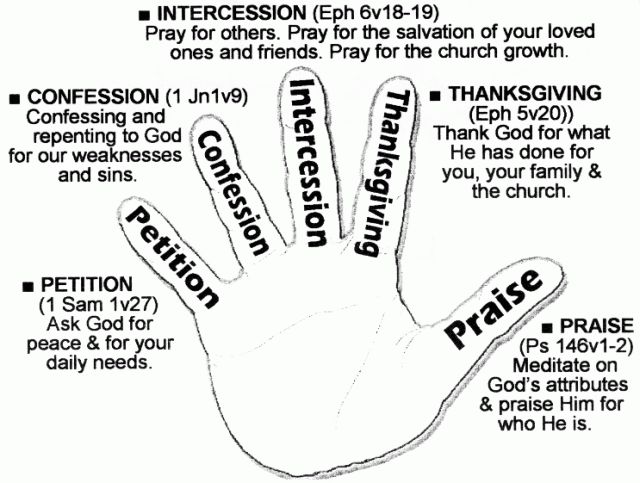
Recently, I shared with my 7th graders the 5 Finger Prayer. It was an easy way for them to understand a certain order to pray in because let’s be honest, sometimes we just don’t know where to begin after we make the sign of the cross.

Here’s an easy way to remember that even a kid can understand:
772f4b56ae676202c26097c0cefd0121

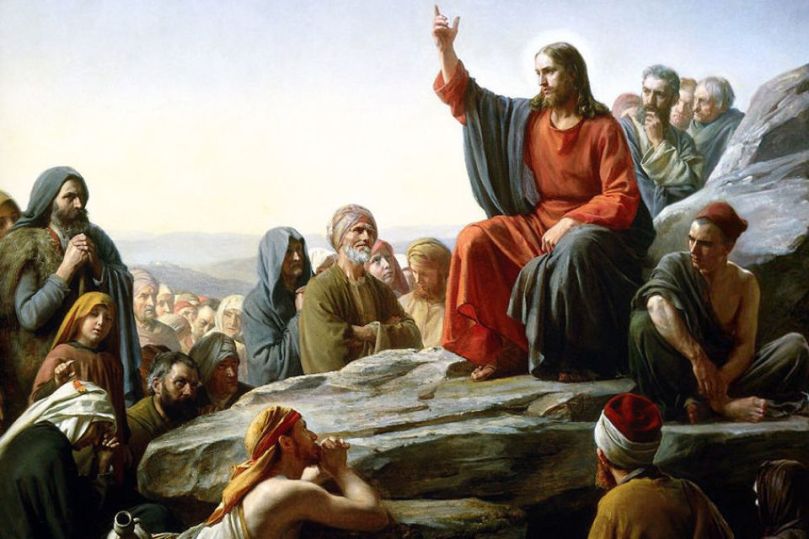
“But when you pray, go in your room and shut the door and pray to your father who is in secret.” Mt 6:6

I’m in awe of people who create and construct their own home altars. Whoa. That’s a bit advanced for me.

I would suggest trying to find your own “cell” or private space in which to pray everyday. If you tend to become easily distracted, like me, then praying in the middle of a house full of people/kids/blaring tv, etc just isn’t going to cut it. A table or a desk and maybe enough space for a couple of books (the Bible being most important of course) is really all you need!

Speaking of the Word, if there was just one book you need or require to get started praying, the Bible is really the only one you need. And while there are Bible apps, I would suggest an actual Bible. And perhaps a notebook to act as your prayer journal. Because chances are, once you start to really pray religiously (ooooh see what I did there?) you will no doubt want to jot down thoughts that the Spirit stirs in you. Plus it’s a neat way to look back after a few months to see how some of your prayers have been answered!

When all else fails, when you feel overwhelmed by all these methods of prayer, just go back to the beginning and think of the woman I spoke to during Adoration. The most basic prayer you can pray is the prayer Jesus taught us:

Our Father who art in heaven,

Hallowed be thy name.

Thy kingdom come.

Thy will be done

     On earth as it is in heaven.

Give us this day our daily bread,

And forgive us our trespasses

    As we forgive those who trespass against us;

And lead us not into temptation,

But deliver us from evil.

Amen.
 

Voting as a Catholic

the_catholic_vote_634843413249746555

Recently a priest by the name of Rev. John Lankeit from the Diocese of Phoenix delivered a homily shared by EWTN via their Facebook page and has close to 300,00 views in just a couple days. In this homily, Lankeit made clear and concise points about which political/social issues Catholics can vote on based on prudential judgement, and which issues are non-negotiable.

This is an absolute spot-on homily. It takes a lot of guts to preach from the pulpit on the issue of abortion. But we can’t be afraid. Not when it’s taken 60 million lives from us. There is nothing to be fearful of. We have the truth on our side.

Prayers to this priest and all the clergy and laity and all who bravely preach exactly what all Catholics and people who consider themselves Christian, to hear. Souls are on the line. You owe it to yourself and the future generations of Americans to listen to this  or read the text below. We cannot claim to be Catholic while enabling the culture of death to continue by voting for a pro-abortion candidate/party.

If you prefer to watch the Homily instead of listen to the audio that I linked above, EWTN still has it up on their Facebook page from Thursday October 6th.

27th Sunday OT (Year C) – October 2, 2016

HAB 1:2-3; 2:2-4; PS 95:1-2, 6-7, 8-9; 2 TM 1:6-8, 13-14; LK 17:5-10

The Devil is a divider who will use almost any tactic to separate Christians from Christ…except for one. He doesn’t typically come right out and say, “Deny Jesus Christ!” because he knows that someone who loves Jesus would immediately reject the suggestion. So, he tends to use more subtle means and subtle words. But more on that later…

For now, let’s deal with something closer to home, and very much in the forefront of many people’s minds: the 2016 presidential election. But let’s do so from a Catholic perspective. Let’s consider the intersection of the practice of our Catholic faith and the exercise of our civic duty, especially when it comes to voting.

Let’s first acknowledge that there has never been a political party in the United States that is perfectly aligned with Catholic teaching on every issue. That does not mean, however, that we are therefore automatically free to vote for either major party, because one party can be much further from Catholic principles on the most important issues than the other party. As a result of that, we are often faced with the task of discerning which party and which policies are most in line with Catholic teaching, and which ones aren’t.

So many issues are subject to the prudential judgment of Catholic voters. What does that mean? It means that Catholics can legitimately disagree, for example, on the best way to address issues such as racial injustice, education, the economy, immigration and healthcare and still remain in good standing in the Church.

There are other issues, however, which touch on matters of intrinsic evil—actions that can never, at any time, under any circumstances be committed, promoted or even enabled by a faithful Catholic. But setting aside issues of intrinsic evil for now, let’s consider some of the more common issues for which Catholics can legitimately exercise prudential judgment.

One such issue is Affirmative Action. This program aims to eliminate perceived disadvantages that minorities face when competing, for example, for admission to college. In our nation, one party favors Affirmative Action to bring justice and balance in our multiracial society. The other party holds that it penalizes high achievers by giving limited spots in the college classroom to less qualified candidates, while denying more qualified students access. One party sees affirmative action as a matter of justice…while the other party sees it as injustice.


But, suppose a candidate for president promoted a policy that would make it legal for someone to kill a black person if that black person created a hardship for them getting the education they desired.

How many of you would be comfortable voting for that candidate?

Another issue that falls under the category of prudential judgment is immigration. One of the major political parties seeks to allow immigration with very little restriction. The other party is concerned that unrestricted immigration leads to, among other things, non-citizens taking jobs that could be worked by citizens. One party favors open borders—the other favors “law and order”.

Now, suppose a candidate for president promoted a policy that would make it legal for someone to kill a Hispanic person if the presence of that Hispanic person made it more difficult to pursue one’s career of choice.

How many of you would be comfortable voting for that candidate?

Thank God we don’t have a candidate from either party who says that they condone such policies. Nobody in their right mind would say such a thing—that we could kill blacks or Hispanics—or anyone else—just for the sake of protecting personal economic or educational interests.

Nobody would say it, but, as you’ll see in a moment…

There is a candidate, in this 2016 race for president, who along with that candidate’s political party does, in fact, sanction the killing of blacks and Hispanics in the situations previously described…under one…particular…condition:

That the black person or the Hispanic person is still in his or her mother’s womb.

Now, this candidate and party certainly won’t say it that way, not publicly anyway. Instead, they use words like “choice” or “reproductive rights” or “women’s health” or other sanitized statements in order to cover up what abortion is and what abortion does.


Now, before we go any further in discussing the extremely sensitive issue of abortion…

I want to say a word to any woman in this congregation here today—or among those watching or listening on TV or radio—who has chosen abortion:

God’s mercy is bigger than your sin and your pain. In ten years of priesthood, I have often been blessed to welcome a woman back to the merciful embrace of God the Father after she has admitted to, and repented of, her abortion in the Sacrament of Confession. A priest in such a situation has the privilege of assuring the woman that she has never lost the love of God the Father, nor her dignity as his beloved daughter, no matter what she did. And so I say to these women today: You do not have to hide from God any longer. I know it’s exhausting to pretend that your pain is not real, that your loss is not immense and that your choice was not devastating. But when you experience God’s loving mercy even after the abortion, you will really come to know and experience that God’s love in forgiving our most serious sins is even greater than his love in creating us. Your Father has been waiting for you for a very long time. It’s time for you to come home!

So, now, having shared that important word with grieving mothers let’s return to the subject of our duty as Catholics in the public square.

When we consider that a woman can walk into Planned Parenthood and have her baby put to death because she doesn’t want to jeopardize her education or career, we must acknowlege that the shocking scenarios described previously are not only possible…not only real…but also among the most common reasons for abortion in America.

Even the word “abortion” has been drained of its meaning—we treat it like nothing more than a term that starts a heated debate rather than a procedure that stops a heartbeat. Many want to treat abortion as merely one issue among many—but that requires that a person pretend not to know what abortion is and what abortion does.

So let’s stop beating around the bush with regard to the current presidential race:

  • Do you know which candidate and party in this election promotes abortion and even promises to expand its availability here at home as well as abroad?
  • Do you know that this candidate and party intend to make you and me pay for other people’s abortions with our tax dollars—something that has always been illegal?
  • Are you aware that this candidate and party, which until recently, said that abortion should be “safe, legal and rare” no longer even bothers to say that it should be rare—but rather, that it must be available any time, any place, even up to the last moment that the fully formed, full-term baby remains in the womb?

    If you do not know which candidate and party I’m referring to, then you should not even consider voting until you do know! Ignorance in this area is unacceptable, because ignorance in this area costs millions of babies their lives and jeopardizes the souls of many Catholics voters.

    On the other hand, if you DO know which candidate and party want to promote and expand abortion, and you still intend to enable them to continue their war on the unborn with the help of your vote, then it is my duty as a priest to tell you that your soul will be in grave danger, especially if you present yourself for Holy Communion after casting such a vote with the full knowledge of what you’re doing.

    Every election season, when a priest addresses such topics from the pulpit, a certain portion of the population complains that he’s preaching politics:

    “A priest has no business discussing politics in church!”

    That’s what some people say.
    But what does God say to the priest whom he has designated to be spiritual father for the people entrusted to his care?

    The same thing he said to the Prophet Ezekiel: “…I have made [you] a watchman for the house of Israel; whenever you hear a word from my mouth, you shall give them warning from me. If I say to the wicked, O wicked man, you shall surely die, and you do not speak to warn the wicked to turn from his way, that wicked man shall die in his [sin], but his blood I will require at your hand. But if you warn the wicked to turn from his way, and he does not turn from his way; he shall die in his [sin], but you will have saved your life. (Ez 33:7-9)

Another of the Devil’s tactics is to encourage us to make excuses for our participation in really bad things by appealing to other good things that we support, which we try to convince ourselves somehow “cancel out” the grave evil we enable.

Take capital punishment, for example. If you bring up abortion, some people will say, “I’m against capital punishment…and if you’re against abortion, then you should be against capital punishment!” Fair enough. What is the biggest objection to capital punishment? That innocent people might be mistakenly put to death. And it must be acknowledged that innocent people very well could be unjustly executed due to the many flaws in our legal system.

And this very reason for opposing capital punishment is precisely the reason that Catholics must never willingly support or even enable abortion with their vote. Because, while some innocent people have no doubt been put to death mistakenly through capital punishment, in abortion an innocent person is always put to death, and never by mistake. It’s always chosen…always intended.

If a person is against capital punishment, then, they necessarily must be against abortion because the intention of abortion is to knowingly and deliberately kill an innocent boy or girl—each and every time.

What about war? People who vigorously oppose the wars in the Middle East, for example, often quote statistics on the great number of innocent people accidently killed in the crossfire. “Collateral damage”—the innocent people killed in war—is, perhaps the greatest tragedy of war. But if a person opposes the accidental killing of innocent people in war, while enabling the intentional killing of the most innocent human beings on the planet with their vote—well…this is hypocrisy of the most extreme kind.

If a person opposes war because of the accidental, unintended deaths of innocent people, they necessarily must oppose abortion because the killing in abortion is neither accidental nor unintended, but always directly willed.

Sometimes we hear the stupendously deceptive claim that a candidate or party will reduce abortions by improving economic or social conditions, while simultaneously promoting abortion as a right worth protecting.


But let’s face facts: Abortion is not caused by economics or social conditions. Economic and social factors are, no doubt, circumstances that affect a mother’s decision in some cases, but they are not causes.

After all, if eliminating abortion were merely a matter of economics, or access to healthcare, or other socioeconomic factors, then why do wealthy mothers also abort their babies?

There are plenty of Catholics who, quite rightly, have criticized bishops and priests in recent years for not having spoken out more forcefully against the sexual abuse of children by priests.

Why, then, do many of these same Catholics want to silence bishops and priests who speak out forcefully against killing innocent children?

Why is opposing sexual abuse of children a matter of justice, but opposing the murder of children a matter of “preaching politics”?

Regardless of the resistance, a priest must follow the example of Peter and John in the Acts of the Apostles when it comes to preaching difficult truths. To those who sought to silence their proclamation of the Gospel these Apostles boldly responded:

“Whether it is right in the sight of God to listen to you rather than to God, you must judge; for I cannot but speak of what I have seen and heard.” (Acts 4:19- 20)

A priest is not only protected by the 1st Amendment (at least for now). He is also bound by the 5th Commandment—Thou Shalt Not Kill.

If a priest doesn’t speak up for those most vulnerable in our society, and if the Catholic faithful don’t actively protect the most vulnerable in our society by refusing to enable their deliberate destruction with their vote, then such Catholics are condoning the killing by their cowardice.

And what did St. Paul say to Timothy about cowardice in today’s 2nd Reading?


God did not give us a spirit of cowardice but rather of power and love and self- control. So do not be ashamed of your testimony to our Lord…but bear your share of hardship for the gospel with the strength that comes from God. (2 Tim 1:7-8)


Part of every Catholic’s share in the hardship for the Gospel is that we must repent of our actions that are offensive to God and destructive to our brothers and sisters. And we must oppose the threats to innocent life that are most real and most urgent. Make no mistake! There is no single issue that threatens innocent human life more directly, consistently and urgently than the deliberate killing of baby boys and baby girls in their mother’s womb. No…issue!

In the time since this homily started, at least 30 children have been deliberately executed in the womb in the United States—and that’s just the ones that are reported.

Let me sum up with some very challenging words:

“We have a serious obligation to protect human life, and especially the lives of the most innocent and vulnerable among us. Whoever fails to do this, when otherwise able to do so, commits a serious sin of omission. They jeopardize their own spiritual wellbeing and they are a source of scandal for others. Should they

be Catholics, they should not receive Holy Communion.”

Catholics in the Public Square, 4th Ed., p. 25

Now, I hope you realize that it takes a lot of courage for a priest to communicate such challenging words as these—reminding his people that some actions are so gravely sinful that they render a Catholic unworthy to receive Holy Communion until there is complete repentance.

A priest who is more concerned about the state of his people’s souls than they are themselves, deserves the esteem of his people for his willingness to speak such difficult truth to them with genuine love—to put the welfare of his people’s souls ahead of his own reputation, popularity or comfort. Such a priest should receive respect, admiration and support, rather than their resistance or criticism.

So please pray for, thank and encourage the spiritual father that God has appointed for you and who loves you enough to tell you the truth.

Because the priest who said these particular words…is your bishop…and mine.


Love Thy Neighbor or Mind Thy Own Business?

no-access-71233_1280You know how people usually compare  the journey of dieting and losing weight to the journey of faith?  Maybe it’s just me since I seem to have an ear for this sort of thing and my ears perk up when I hear anything related to food. But I swear ever since I started reading more about the saints and listening to Catholic speakers and reading Catholic books, it seems like desire and sin are always compared with our desire for food, and the  journey to sainthood and heaven is always linked to a weight loss goal.  It’s fascinating because, truthfully, it’s spot on!
Don’t believe me? Read on.

So I have a spiritual director (Hello Fr. Adam!) and what I’ve discovered is that SD’s are similar to Personal Trainers in a lot of ways (similar to any coach/counselor).

We give instruction, we give guidance, we ask questions. But ultimately, we can’t force you to lose weight/get stronger etc. That’s something you have to do on your own. My SD can’t force me to do anything but he does provide guidance, instruction, asks probing questions (that I sometimes hate to answer). “Did you workout like you planned?” similar to “Have you prayed using Lectio Divina?” to which I usually answer, “I plead the fifth Father!”

Most personal trainers or strength and conditioning coaches will ask their client to record their workouts and their food intake in a journal. It’s more about self-reflection than anything else. Same is true for anyone seeking the “more” to life. I’ve always journaled but I go through periods of lulls where I just don’t feel like writing anything. And I cannot even begin to tell you how many times I’ve attempted to log my food and kept failing because of laziness.  It’s an ongoing struggle.

And then there’s the gym. Clearly, the most obvious similarity is that to a Church, with the congregation being fellow gym-goers.

But I would say watching people work out is not like sitting in the pews. That’s probably more comparable to every day activity.

For example – I see people at the gym doing exercises improperly at least once or twice at each visit. Of course, no one is going to be perfect all of the time, but that’s why we have gyms – so people can exercise and work their way to their own version of the “perfect” body. (A whole other blog post)

But what about these gym people who seem to have terrible form and their breathing is off and they look like they might drop a dumbbell on their foot (or face!) any minute now?

Do I have an obligation to go up to them to tell them what they are doing is wrong and that they might hurt themselves? If the potential to hurt themselves is imminent, I do and I have. (A dumbbell to the face is not something I would like to watch!) But usually, they’re just going to hurt themselves over time. Not right away.

Keep in mind these are people I have seen repeatedly throughout the week. It’s usually something as simple as improper form. Will it kill them? No. Will it hurt them? Most likely, over time. Will it be an injury they can’t recover from? No idea. But most likely not.

Do I now have an obligation to help them or to say something? What if I wasn’t a PT and just a regular knowledgable gym-goer? Do I interrupt their workout and say something or just let them figure it out on their own? I could just wait until they learn from someone else more qualified. But then, won’t they feel kind of silly or stupid for doing it “their way” for so long? Will they wonder – “Why didn’t anyone tell me this before?”

Why is it so hard for me to work up the nerve to say something, and offer a better way for them to achieve their exercise goal at that moment?


Won’t You Be My Nosy Neighbor?

As you ponder that, let’s take the guy out of the gym and put him in a real-life scenario. Let’s say it’s a neighbor. Like, literally, your next door neighbor.

You know he’s married with a kid. You’ve met his wife and daughter. They go to your church. But you don’t know them that well. Just well enough to wave hello and once in a while borrow a cup of sugar or something. (Does anyone do that anymore?)

Let’s say over a period of time, you notice this guy talks down to his wife and daughter. But he seems to verbally abuse the wife more than the kid. You only notice this when you can overhear them if they’re outside. But let’s say it starts to become more frequent. And let’s say he starts to do it while you’re hanging out with him and his family at a cookout or something. Or at a church function.

Do you wait and not say anything? Do you pull her aside and say something? I mean, these people go to your church. But it’s not like he’s sinning right? He’s not hitting her because you’d be able to tell, right? You could always assume he’ll learn how to be a better communicator eventually from someone more qualified than you. You’re just a neighbor and you should probably just mind your own business…right?

The big dilemma is this: At what point do we go from casual observer to intervener?

Because I think that’s what’s happening in the world today but it’s being misinterpreted as being nosy and injecting your self into someone else’s life. Or the most popular argument: “You’re forcing your beliefs onto me!”

No, actually, no one can force you to believe anything. I can’t force you to lose weight, I can’t be forced to lose weight and I can’t force you or anyone to become a saint.

The Christian and Correct Response

It comes back to what I said in the beginning: We can guide. We can offer assistance. We can start the conversation.

And one thing I’d love for people to know, especially those who don’t quite get us Christians, is that we want to help people. I know some Christians are better at this than others. Some yell and scream (not good, seriously can we stop that please?) some calmly approach (better) and some literally offer to accompany and walk with that person on their journey (best). But even this approach may come across as hurting someone, because we are telling them bluntly, that they are hurting themselves by whatever sin they are committing. But even if we tell them the truth in love, I promise we really have their best interests at heart.

When we see someone living their life a certain way that we believe to be wrong and that will hurt them, we have a moral obligation and a duty to help that person the best way we can. But, and this goes to my fellow Christians, once you try to help someone, you have to get out of the way and drop it. No amount of coercion or yelling or degrading will ever get anyone to change their ways.

So I end with a question, for myself and for you, to think about: If you see someone, your neighbor, your fellow parishioner, your friend, doing harm to their soul, will you work up the courage to provide a better way?  Or will you just walk on by? Is minding your own business really the loving thing to do?

The Gift of a Public Faith

“Authentic Christianity is meant for the world and will always be a challenge to the corruption of the world.” – Bishop Robert Barron

rf

The past few weeks I’ve heard and experienced a very clear message from several public figures in the Catholic world: Faith wasn’t meant to be privatized. Christianity is not a privatized religion. It must be shared publicly in order to fight the resistance of the world.

I think now, more than ever, it seems we need more public displays of Christianity.

Why?

Well, not only to fight off evil, which is a good enough reason of course. But more to dispel the myths of who Christians are and what they look like and how they act. To clear up the confusion! Because I gotta tell you, there are a LOT of confused people out there who have a warped idea of who an authentic Christian is.

Due to the rise of secularism and people identifying as being either non-religious or just plain old “spiritual,” a common assumption is that we are all just like the group of Westboro Baptists. I was astounded to hear this!  Not only is this completely FALSE but it’s also disgusting and hurtful to be associated with this very very small group of individuals. In doing research for my post today I actually went to their website just to confirm that this group has nothing good to say and I was right. Sadly, they are all very misguided. They preach hate. Plain and simple. It was sickening and most of all, discouraging.

I thought to myself, “This is what non-Christians think of us? That among the 30,000 different denominations of Christianity, we are all associated with these people who preach nothing but hate and make it their duty to protest funerals?”

Isn’t this even more of a reason to publicly express our faith and what we believe, in love and with compassion? It won’t do us much good to retreat to our cozy homes or stay inside our churches and just keep our faith to ourselves.

So it starts with us; with me and you.

But where to begin?

The smallest acts can go a long way

Something as simple as saying grace before every meal, even when you’re someplace like a fast food place or a restaurant can go a long way.  How? Well, because you are being SEEN. Others notice that kind of thing. I can’t tell you how many times I’ve said grace before eating a meal and have gotten just a simple smile from across the room from folks. Almost like a nod of approval or a just a simple gesture to show that they respect it. And it serves as a reminder to others that may have stopped practicing this ritual.

I read somewhere recently to always pray before eating a meal at a restaurant and make sure to pray before the waiter/waitress leaves the table after placing the order. That way, you take that moment to ask him/her if you can offer up any prayers for them, too!

It could be something like just bringing your Bible somewhere. Or the Magnificat or the Liturgy of the Hours. Plenty of people are nosy, I have found. They’ll strike up a conversation with you just about anywhere. (Unless it’s just a friendly Midwestern USA thing?)

Take for example, reading a book. Any place that’s public like a beach, or park or commuting on the bus or at the airport is a place where you find many people are reading while waiting for something. I’m always curious what people are reading so I have no problem just asking someone, “What book is that and is it any good?” Fr. Tom of the TOB Institute mentioned that he brought his Breviary with him on a fishing boat recently and it always gets the locals talking and asking him, “What’s that? Is that a Bible? You some kind of holy man or something?” It’s a great icebreaker.

I will give just one small example from my own life that I thought was interesting. It took place at the car dealership where I was getting my oil changed. Of all the places, I ended up evangelizing to the service guy!  He initiated the conversation by asking, “So is it Sister Michelle? I noticed that book in your car when I went to move it.” The book in question was called A Vowed Life that one of my dear friends loaned to me.

I laughed and said “Oh no, it’s most definitely not Sister Michelle.  But funny you should mention that because I’m actually discerning consecrated life, which is different than religious life.” So he proceeded to ask me all kinds of questions about that which was fantastic. Then I went to see my sales guy and he had heard from the service guy what we talked about and so then HE proceeded to ask me more questions about consecrated life and what that would look like, etc. So we had an awesome conversation about discerning one’s vocation. Both of these men had discerned married life so I explained how and why I discerned that married life is not my vocation and how I came to that conclusion. What a place to have this random encounter, at a car dealership of all places.

The point is that when out in public, and not just in the pew, we are being seen. We are being observed. Is our conduct in line with what our faith teaches us? Are our actions one of faith or one of what the culture tells us we should be doing? Are we going to let non-religious people stereotype us as “those hateful bigots?” Or are we going to stick up for what we believe while simultaneously preaching the love of Christ?

The public square is open. It’s up to us if we’re going to step into it and declare our faith to all who can hear.


The Gift of: Wasted Time

monstrance1For the past 7 months I’ve been kind of sneaking around.
I’ve been lying to my friends on Saturday nights. They wouldn’t have noticed if you asked them because I normally don’t stay out past midnight on Saturdays, if I am out. (I’m old I know).

But if there’s an event or a get-together on a Saturday evening, I’m usually the first to head home as soon as the clock strikes midnight.

No one ever really questioned me or harassed me why I would leave “so early.”  But I never did speak up and say why, although I really wanted to. But there’s that little voice that would say: “Don’t bother. They won’t get it.”

But, I think my friends can handle it:

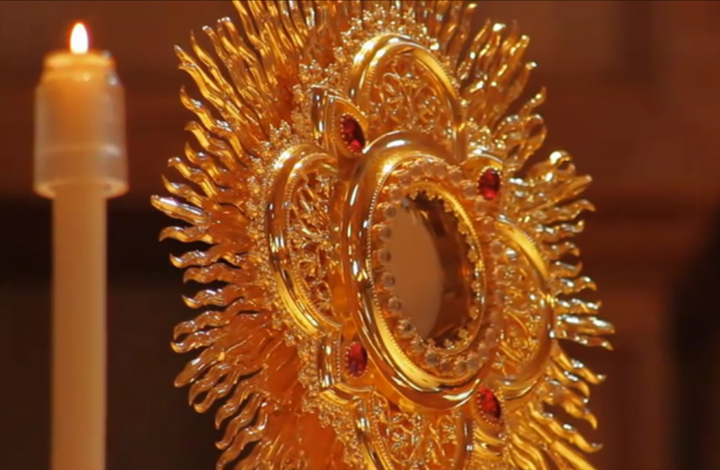
I get up at 3:45am on Sundays. Why? Because I signed up 7 months ago to be an Adorer at my local parish from 4am to 5am. An adorer is a person who volunteers to sit with the Blessed Sacrament (AKA, Jesus) so He is never alone.

Pretty comical to me that I actually chose 4am on a Sunday to do this. But I gotta say it’s kinda cool to have Jesus all to myself. Not that it’s supposed to be that way, but let’s face it, 4-5am on a Sunday is a bizarre time to be out and about.

Several parishes in the area have a 24 hour adoration chapel actually. (I’ve been to almost all of them, because I’m crazy like that) and all of them have the same request in the bulletin – Adorers are Needed!

So allow me to sell you on this:

You have this great opportunity to sit in a quiet space in front of Jesus for just an hour and pray or listen (preferably both). I normally say a Rosary, journal, or read some sort of spiritual book. Most chapels have a little “library” to borrow from if you don’t have anything to read. And trust me when I say they will have a rosary (or 20) to borrow as well.

In the past I’ve also brought my (gasp!) phone with me to read emails of prayer requests. I usually look at the person’s name and substitute their name for “us sinners” in the Hail Mary as I pray the Rosary. I’ve listened to homilies online, I’ve read prayers from my favorite saints. But much of the time, especially if it’s the 4am time slot, I’ll sit in silence. And because it’s 4am, it’s quiet outside too. So it’s probably the quietest time I’ll ever have. By the way, if you live in a loud household with pets and kids, you will LOVE the quiet and stillness of a chapel, I don’t care who you are. It’s a terrific break from the hustle and bustle of everyday life..

Another good suggestion, especially for visual folks –  Take the photo collage of the seminarians (I assume all dioceses print these out, right?) and look and read each name of the young man and say a prayer for him. It’s gotta be rough being in the seminary, wouldn’t you think?  All I know is they could definitely use some prayers. And since there are so many of them, this usually takes up a good chunk of the hour.

As someone who has spent probably more hours in front of the Blessed Sacrament than actual working hours or hours at the gym this past year, I can tell you there are some incredible things that happen to you as you sit in silence and meditate.

I’ve had emotional highs and the lowest of lows sitting there. I’ve laughed and smiled, and  I’ve cried my eyes out. And sometimes, yes, I feel nothing. (But only later to discover that my prayers were indeed answered).

I’ve had funny experiences and downright bizarre experiences. Especially at 4am.

Being a frequent adorer at various churches in the area, I can tell you which parish has the creakiest sounding roof and the church with the comfiest seats. I now know which chapel to avoid on a Sunday afternoon when the ice cream truck goes by outside while you’re trying to remember the words to the Apostle’s Creed but that darn jingle is echoing through the walls. I can tell you someone will most likely distract you with their snoring (it’s EASY to fall asleep) and their growling stomach (Fasting and prayer go together like PB and J).  I can tell you you’ll more than likely run into people who don’t abide by the “quiet” rule and proceed to pray in a loud whisper, making it really uncomfortable to hear their prayer requests. (Bring headphones!)

But the little distractions that can occur during your holy hour are actually helpful in that they force you to really call out His name to focus your attention back to prayer. And really, that’s the whole point. I read once from a Saint (can’t remember which) that even if you just sat in the chapel calling the name of Jesus for the whole hour, that would be sufficient and a completely suitable prayer! So what we might consider a “waste of time,” would actually be considered a very worthwhile prayer.

I suppose this is my plea for you to check out your neighborhood church my Catholic friends. Adoration is the best thing ever! Even if you don’t belong to the parish you can still volunteer to adore Him. I would suggest that even if you know you can only take that hour for a month and then you’ll be on vacation or whatnot, just sign up! The people in charge will be so grateful.

And Jesus will be thrilled to see you too!


The Gift of Woman: In Culture and Church


WGCC-Logo

For those who don’t know, there’s a gem in this little town of Steubenville Ohio called Franciscan University.

Okay so first off, I want to go back in time and attend there.

Secondly, since time travel is not an option, I am determined to have my nephews attend there. The oldest nephew is 13 so this gives me 4 solid years to work on him. Hey, I mean, he’s already seriously considering attending a Franciscan high school so, I don’t think this will be too great a task.

So why mention this university? Well, I recently had the privilege of attending an academic conference there called Woman: Gift in Culture and Church.

Now when most people hear “Steubenville” and “conference” they automatically think of one of these – a teen or young adult or adult conference. But this wasn’t one of those.

This conference was the brainchild of a young woman named Haley Ketschke, an education major. This Friday/Saturday conference was essentially her senior capstone project for the University’s Center for Leadership program.

Together with co-leaders Toni Brown and Marykate Heim, these young ladies put on an amazing and well-organized conference with 4 of the most prominent and popular theology speakers of our time giving their keynote addresses. I was just in awe from start to finish. To think that 3 students put on this conference was just amazing to me.

I don’t have the ability to dissect every session that I attended but I wanted to give a few quick snippets of wisdom that I learned while I was there.


Dr. Pia de Solenni

I attended her keynote called Women in the Body of Christ and in Society as well as one of her breakouts called Maternity and Its Impact on Society. 

Main talking points from both talks:

  • A relationship built and based on love and not one of power, is the goal.
  • No one questions their “rights” and “power” when their relationship is based in love
  • Adam and Eve were promised love but chose power. In effect they lost love and gained power.
  • Motherhood is not something you “do.” It’s who you ARE.
  • Jesus broke ground in several ways with women – Mary Magdalene as the Apostle to the Apostles. At the Last Supper the disciples were asked to do “women ‘s work.” The woman at the well was the only one who gets up and proclaims He is the Messiah. Everyone else questioned him.
  • “Helpmate” – a form of divine assistance; woman was created as a form of divine assistance to man. (Examples – Moses’ sister returning him back to his mother; Judith helping to liberate Israel)
  • “The future of the world depends upon women.” Pope Paul VI
  • Every woman is called to live in maternity – every part of her – spirituality, physicality, mentality
  • We know men and woman can do the same things; the question is about being and how that effects what we do; what does it mean to be a bride? The Church is the Bride of Christ
  • This all points to marriage of some kind. We have the gift of modeling bride- we have the ability of what it means to be Church.
  • We need to keep with the love story, not a story of power. We need to stop asking how we can have better roles in the Church of POWER. This is not what we were created for.
  • Here’s our challenge: How can men and women better live out their vocations outside the 4 walls of the Church?

Dr. Michael Waldstein

I attended his keynote called Where the Order of Love First Takes Root: Woman as Help

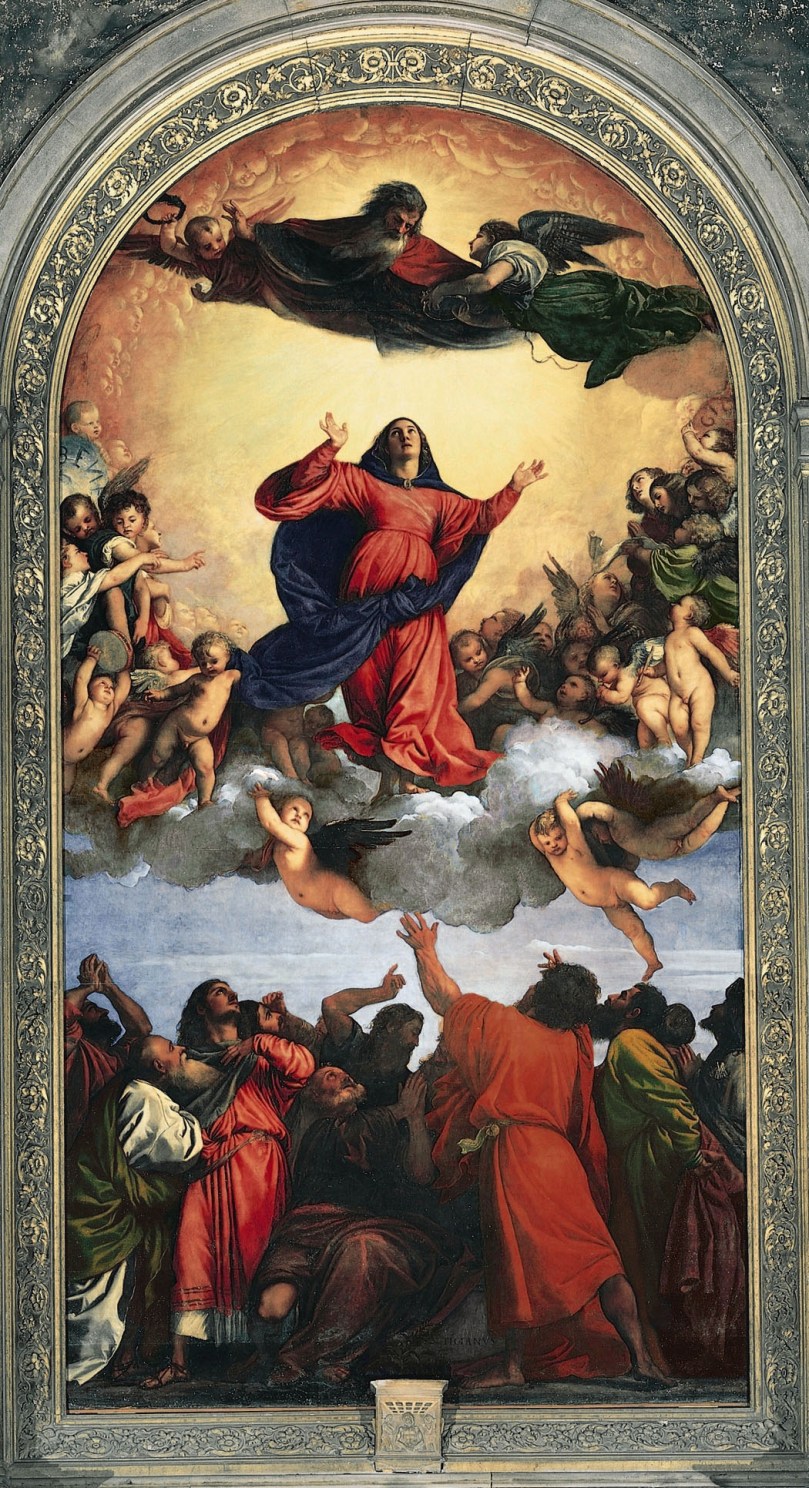
The poor guy had to talk after lunch, the most undesirable spot for any speaker anywhere in any venue. But he handled it like a champ and despite his soft spoken and soothing voice, I managed to understand and take a great interest in what he was saying. He gave a great presentation incorporating lines from John Paul II’s Mulieris Dignitatem (The Dignity of Women)  and this beautiful piece of art called Assumption of the Virgin by Titian. tizian_041

It was kind of like art history blended with theology. Really fascinating!

I also attended one of his breakouts called Why the Dominant Culture Opposes the Order of Love which was all about how we have gotten to this point in our culture. He discussed Sir Francis Bacon and Rene Descartes. He discussed this ambition for power over nature. It was a short talk in order for him to answer questions instead so we could focus on solutions. One of his answers to “How do we reverse these effects of how the culture has been heading?” was to find like-minded people and to “delight in goodness. See deeply the goodness in people, especially those who serve.”


Dr. William Newton

He was the first keynote speaker and his talk was titled:

Behold the Handmaid of the Lord: Exploring the Ecclesial Vocation of the Women 

Key points:

  • The Genius of Woman is not an IQ – it is a kind of intelligence. It allows a woman to read inwardly the heart of the a person
  • She sees the human dignity of each person, the value.
  • It’s written into us as women, like a charism.
  • The family is the most important job for a woman – to build Christendom in the household, this is the goal and it is always collaborative!
  • The mother has a more decisive role in bringing Christendom into her home – Why? Because she is essentially the home. Her womb being the original home.
  • Women evoke love, we kickstart the process of loving, softening a man’s heart.
  • If we are going to live our vocation we need to bring our femininity with us!

Dr. Newton’s breakout session I attended was titled:

Deaconesses in the Church: Why or Why Not?

My notes were super sloppy on this one but he presented both sides of this issue by asking two questions:

  1. Is there any compelling evidence in favor of deaconesses?
  2. Is there any compelling evidence against it?

After addressing these questions he asked if this was of ecclesial or divine origin? He also questions if we then include the deaconate in the Holy Orders.  If Canon Law says it IS a Holy Order, then is the Canon Law infallible?

The whole discussion was really interesting and although my notes are clear, I couldn’t obviously present his case right here. He concluded, in his own opinion, that there is no compelling evidence for deaconesses and strong evidence against it. But he also said the jury is still not out on this so don’t be surprised if we hear people debating this again soon.


Dr. Deborah Savage

I only heard her keynote talk called The Genius of Man and Woman: Complementarity as Mission

If I had a to pick a favorite, I would say this one was it for me. She had awesome anecdotes, she was very clear about what she was trying to communicate and she was funny!

Some key points:

  • Why did God create us male and female? We have a responsibility to answer this question in order to save the world and fix the culture
  • Creation story – Life forms were created from lower to higher. Women being created “second” to man is not accurate; we were created last! We are on our way up!
  • The word “helper” is not a servant or a slave – We are considered Divine Aid. We are help sent by God, someone who can help men to live.
  • Eve is not below Adam but she’s also not above him – she is NEXT to him.
  • Man knows things that woman does not – he has dominion over the animals. He likes to know how things work, what does it do, what is it for?
  • This is part of his masculine genius
  • He also knows woman is not an object and cannot treat her like the other “things” and animals. It’s a reciprocal relationship from the start
  • Woman Genius  – We are more naturally oriented towards persons
  • Woman sees herself in light of the other
  • The existence of living persons, either in the womb or walking around, cannot be forgotten while we frantically get tasks done
  • We are ordered toward authentic human flourishing
  • Why did the serpent tempt Eve if they are equal? Because she knows very little about the things of this world; she was at a disadvantage.
  • The serpent starts at the top! He knew if he could trick Eve, he could get to Adam
  • Adam failed Eve at the moment she needed his protection the most

There was a Q&A Panel discussion that I couldn’t stay for but I’m sure it was incredibly helpful and informative. It was to be audience-led and I’m willing to bet there were many questions that were addressed that I myself wanted to get answers to. But another conference for another time I suppose!

I will say I left the conference feeling hope for the future. Granted I was clearly one of the few non-students in attendance, it was really encouraging to see so many young people eager to learn how they as women (and men) can be a gift to our Church and how to turn our Culture around from one of death to one of life giving love!


The Gift Of: Recovery from Addiction

So this is a first for me: A Book Review!

If you’re a crazy (good kind of crazy) Catholic you have probably heard of Matt Fradd. And if you haven’t, well, now you have. He is a very popular Catholic speaker and apologist. As a fellow student of Christopher West, I found him while studying up on Theology of the Body. He educates and informs his audience on all things Catholic (kind of an important thing for an apologist to do) and he has a personal interest in discussing how people can overcome their addictions to pornography and masturbation.

Say wha???

Quite the curveball I just threw at you, sorry about that.

It makes us a little uncomfortable right? This isn’t exactly dinner table conversation. No one wants to talk about this issue, let alone admit that they might have an addiction to it.

As any good TOB student will tell you, we have to shed a light on these issues instead of keeping them in the dark. If we don’t talk about it, how will anyone know how damaging this can be? Most importantly, how will we ever begin to be healed?

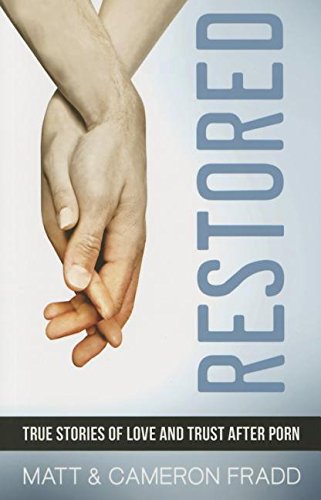
This is where the book review comes in. Matt and his wife Cameron wrote a book that I offered to review for this blog as well as We Dare To Say.  So let’s dive in!


41dsce4fohl

Restored: True Stories of Love and Trust After Porn

by Matt and Cameron Fradd

In a civilization dominated by images, as ours is today, images have become the privileged vehicle of the ideology of a world saturated with sensuality, which has made human sexuality its favorite theme, detaching it completely from the original meaning given to it by God.  (Virginity, by Raniero Cantalamessa, OFM cap)

I hope it’s not bad form to begin a book review with a quote from a totally different book.  And if it is, well, so be it. But see here what Fr. Raniero describes? Look what has happened to our world when it comes to human sexuality! It’s twisted and distorted! This is where I think we need to begin the discussion.

The secular world loves to detach God from everything. Anything that you or I or any other Christian deems sacred, chances are the world will find a way to twist it and distort it into something vulgar.  For everything that we find to be beautiful, society tells us the opposite is what we really want. Just look at fertility and contraception, chastity and lust, procreation and abortion, marriage and the breakdown of the family, sex and pornography.

So while we can tackle all of the issues mentioned above for days on end, the focus of Restored is specifically pornography and the effect it has on the wives.

Why should you or I care about those who are addicted? Because, as a community, we have a duty to offer our assistance, even if we ourselves don’t have this problem. Also, it would be a good idea to read up on this to be aware of possible warning signs that you, or someone you love, could be developing an addiction.

Even the United States Conference of Catholic Bishops (USCCB) came out with Create in Me a Clean Heart: A Pastoral Response to Pornography Use in the fall of 2015 which stated:

While the production and use of pornography has always been a problem, in recent years its impact has grown exponentially, in large part due to the Internet and mobile technology. Some have even described it as a public health crisis. Everyone, in some way, is affected by increased pornography use in society. We all suffer negative consequences from its distorted view of the human person and sexuality.

We all suffer the consequences. Every one of us.

How does Restored help? Because when the 10 women in this book tell their story, you enter into their world. You see things through their eyes. And many times, it’s painful to even read about it.

I admit, I found myself cringing at times when I would read what these men did to feed their addiction. I also found myself on the verge of tears as I saw the pain and the hurt as the women struggled to understand this betrayal. But mostly, I found their stories to be quite beautiful. You can see them start the healing process as they sought out our Lord and went to Him at Adoration and Confession and by praying to Him. Their spiritual journeys are amazing and I found myself cheering them on at the end. I don’t even know these couples but I found myself praying for them and their relationships. I began to relate to them, albeit in a small way.

For the women, I could understand how they may feel like a failure because their partner sought out satisfaction from some thing or someone else.

From the men’s point of view, I know how it feels to be addicted to something that you don’t think is a very big deal, or even particularly sinful. “Everyone else is doing it, is it really that bad?” “I’m not hurting anyone, what’s the big deal?”

Soon, you start to lose control. You are actually hurting yourself when you give in to these disorders desires. Lust can quickly dominate your heart and your mind as I will be the first to tell you. (another blog for another day). But it’s one surefire way to start down the road to addiction.

You can quickly find yourself going further and deeper into darkness, as many of the husbands did.

Here’s part of one testimonial from one of the courageous women named Christina:

Addiction is a progressive disease. What was a fun way to

spice up our sex life turned into a nightmare. My husband’s

need for sexual stimulation grew until pornographic pictures

could no longer satisfy his lust. He sought out real-life pornography

in the form of our extra partner and his affair. I have

known other sex addicts who started out with pornography

and, as their disease progressed, began having affairs, picking

up prostitutes, and even experimenting with homosexuality.

Without help, this disease only gets worse. – Christina 

It’s probably helpful to mention here that the book is not meant to condemn or shame anyone who has this addiction. And it’s not meant to make you believe that you have a problem if you have seen porn once or twice in your life.

It’s meant to shed light on pornography addiction, address how much damage it causes, and start the conversation to heal.

Restored gives women, in particular, hope. All of the women mention their OWN recovery and healing and how incredibly helpful and necessary it has been for them. All of the women mentioned fellowship with other wives as being their life-preserver, in a way. It seemed to be the most common theme throughout all of the testimonials.

Having fellows takes me out of my own head and my own

problems and reminds me that I’m not the center of the universe.

My fellows ground me, reminding me that there are

people who are hurting just like I am and that together we

can recover from the effects of sex addiction. I don’t have to

do this alone. – Christina

One again, this just proves that we need community so desperately these days, especially as we go through a difficult time. Who else to better understand the pain and heartache than other hurting wives?

Was I willing and able to forgive my husband? With God’s grace,

absolutely. Even as Ryan confessed to me, through my hurt

and anger, the thought never crossed my mind that this was

the end for us. In my storm of emotions that night as he told

me about his pornography addiction, I never stopped loving

him or caring about him or his soul. We made a promise to

God—a promise to work unceasingly on getting each other

to heaven. We had built a family together, and this entire

problem was something that, with God’s grace, we were going

to not only survive but come out of with a stronger and

healthier marriage. – Ana 

Did you catch the keyword there? God’s grace. If heaven is our ultimate destiny, and I would hope it is, how can we get there if we don’t address the sins that are holding us back?

My absolute favorite part of Restored was that all of the women said how they absolutely needed to Jesus in their lives in order to fix their marriages. They needed prayer. They needed Adoration. They needed to put on their armor for this spiritual battle.

I started learning more about prayer, and I had a new way

to intercede. I began daily to take my fear, anger, and woundedness

to the cross in prayer. I started praying for my husband

to have a changed heart. I stopped asking how he was doing

with his struggles and instead I asked how he was feeling and

what he was thinking. I listened with a God-given detachment

to his fears about work, our marriage, and the kids. I

was able to care for his wounds, because I had given mine to

Christ. –Elisa

These are real stories of hope and redemption. I believe it’s incredibly inspiring for these women to speak up and break the silence and put their stories into a book for the world to read. As I read story after story, I truly felt like I was experiencing their heartache, their embarrassment, their anger, their hurt.

These brave women speak to you, the reader, as if they are right next to you and they say, “Sit down and let me tell you my story of how the devil tried to destroy my husband and our marriage…and how God and I worked to save it.”


All married couples should give Restored a read. We all admit, at least I do, that pornography is not the easiest subject to casually slip into a conversation. How about mentioning the book to your spouse to get the conversation going? Especially consider this if it’s something that’s been weighing on your mind and you don’t quite know how to bring it up.

If you’re just dating someone, you should also read it. Why? Because if you’re a couple trying to be chaste before marriage, chances are you are struggling with it. This book can serve as almost like a “marriage prep” lesson for you to understand how our disordered desires won’t do us any good, especially trying to get our future spouse to heaven.

And to my fellow single friends – you should read it to. If you hope to be married someday, you will definitely want to do your part and research this topic.

But even if marriage is not your calling, I would consider reading Restored and then sending it to someone you know who could use a little help in this area. Perhaps a married couple close to you is struggling with this problem but is too embarrassed to admit it. Let them know that they don’t have to bear this cross alone!

This book can be the gift that they need right now!

Lastly, for those who are looking for hope and healing due to their own personal struggle with pornography, consider buying Matt’s other excellent book entitled Delivered: True Stories of Men and Women Who Turned from Porn to Purity.

And please, always remember: There’s no sin too great for God’s mercy.


Too Scared to Speak

In the past 6 months I have shared many articles on social media about pro-life and bioethical issues that are most controversial in our world, especially concerning those about abortion and birth control with the occasional post about homosexuality, gender identity, and so-called “same sex marriage.”

It never seems to fail that each time I post, one of my Christian friends privately messages me and thanks me for speaking up and not being afraid for saying what they wish they could say. At first it was random, but lately it’s been a more frequent occurrence. And the verbiage is usually similar – A common theme of fear.

“I’m not brave enough like you to say anything. ”

“It’s so great that you have so much courage to speak up on such controversial issues.”

“I can’t speak up like you do, I’m a wimp.”

Courageous? Brave? It’s strange that people use these words to describe a simple keystroke. I mean, really, how difficult is it to click the word “share?”  But what is even more strange is the “fear” that people have in their own hearts.

What are we afraid of? If we know this is truth, what is there to fear?

I suppose the biggest fear is fear of losing an argument. Fear of losing friendships maybe. Fear of looking foolish. Fear of what others think of us.

But something I think we need to be more fearful of is Ignorance. If we don’t stay informed of these pressing issues, then this allows misinformation to spread. And let’s keep in mind one of the Spiritual Works of Mercy is to “Instruct the Ignorant.” So that means, in this Jubilee Year of Mercy issued by Pope Francis, that we not only have a duty to seek the truth ourselves, it means we need to share the truth. (The “ignorant” isn’t meant to be an insulting term here; it simply means the “uninformed.”)

For example, the controversial undercover Planned Parenthood videos:

I have met with and conversed with a few people who have never even seen a minute of any of the undercover video footage from the Center of Medical Progress and journalist David Daleiden. Not surprising when you read that none of the major media outlets gave it more than 39 seconds of coverage.

But just today, a grand jury in Houston has found Planned Parenthood not guilty of any wrongdoing and decided to bring charges up against Daleiden himself. Oh and one of the DA’s is on the board of Planned Parenthood. Sigh…

To those of us in the pro-life movement, this would seem like a huge step backwards, especially considering the March for Life in D.C. and the Walk for Life in San Francisco were so successful.

But see, I think of this as a misstep by Planned Parenthood and the abortion industry. I think, rather, I pray, that this will be their undoing. How?

Because now they will be forced to take the stand. Of course, nothing is going to stop liars from lying, even under oath. But I predict one of these doctors will have a major conversion.

If “Jane Roe” could have a conversion, would it not also be possible that one of these abortion doctors could have one as well?

Today in the Catholic Church we recognize the Conversion of St. Paul. St. Paul had the biggest conversion ever. Like, if there was an award for conversions, this dude would receive the award, hands down. The  guy was pretty awful when he was Saul, persecuting followers of Jesus left and right.

Reading about him was one of the catalysts for me when I myself “came back” to the Church after a short departure.

Reflecting on him tonight I can’t help but think, “Wouldn’t it be great if one of these PP docs or workers had a conversion? Wouldn’t it be awesome if they decided to find a way to give life instead of taking it away?”

Do you know what’s stopping them?

Probably the same thing that stops you from sharing or speaking up on controversial topics like abortion: Fear.

They probably have no idea how to leave the industry. Think about it – What would they do if they left? How would they make a living? What would their co-workers think?

Enter the awesome website run by Abby Johnson called And Then There Were None. She seeks to help former abortion workers (yes, even doctors themselves) to leave the industry for good. To date, they have helped approximately 200 workers out of this darkness and on to the path to healing and recovery.

She helps them speak up when they are too afraid.

So let’s set the example and show people we aren’t afraid of a little debate, of a little controversy, of a little action.

We have truth on our side.

  • Looking for ways to help the unborn from the inside out? Consider writing a “Love Letter” to abortion clinic workers in your city/state. Before someone can be converted, they need to know they’ll have support when/if they leave. This means we don’t shout obscenities and awful things to them when we stand outside abortion clinics. This means we love them and pray for them. We hate what they do for a living. But we always love them because they are humans and worthy of respect and dignity.
  • If you’re looking for simple ways you can help the unborn and promote the pro-life message, here’s a short article from Word on Fire.
  • For other helpful websites that speak the truth when it comes to bioethics and the Catholic Church teachings, especially the unborn and human dignity, I recommend the following:

National Catholic Bioethics Center

Life Site News

Live Action

LifeTeen

EWTN


Remaining Silent…When You Really Want to Scream

No one is so good and devout as not to encounter some worries and troubles in life. When you face tribulation and are sorrowful in heart, you are with Jesus on the Cross. And again, when through the grace of the Holy Spirit you enjoy consolation in prayer, you rise, as it were, with Christ from the dead and the tomb, and with a jubilant heart you celebrate Easter with Jesus in the newness of life.


When someone directs harsh and unkind words against you, you are given to drink of the chalice of the Lord as medicine for your soul. Remain silent and drink of the cup of salvation without complaint, for the Lord will be your protection in nothing more admirable than to remain silent and patient, for in this way you curb the mouth of him who utters evil against you, and at the same time, you follow the example of Christ, who remained silent before Pilate, though much false testimony had been brought against Him. You are no better than God, who, for your sake, endured scourging, ridicule, and death at the hands of the wicked.

Thomas à Kempis, Bountiful Goodness, pp 36-37

God’s timing is always perfect, isn’t it?  I read this passage a couple days ago, just when I was seeking some answers about a recent encounter with someone who had some harsh words for me. This person said some pretty nasty things to me that aren’t worth repeating, but it was made clear to me, they had no idea just how rude they were being.

My initial response was silence, mainly due to shock that someone would disrespect me so much, but also because I have never felt it beneficial to respond to hate with hate (or in this case, disrespect with disrespect, as her comments weren’t really hateful as much as they were just downright rude and nasty).

Only one thought went thru my mind as she lashed out at me, and that was “Hurt people hurt people.” So I stayed silent, said little, and finished up my work with her. She is no longer in my life (she was a client) and this was her final session with me. My mind was racing after she walked out thinking, “Why would she say such awful things to someone she barely knows? What did I do to deserve such a beating? Where was this anger coming from?”

I even went so far as to reverse the situation and ask myself, “When was I this nasty to someone? When have I lashed out at someone trying to help me?” I was seeking the lesson here, and I admit, I struggled to find it. I am by no means perfect but I don’t recall in recent memory reacting in a similar way this woman did with me.  I got an answer though, and that was: “This isn’t about you. She’s struggling with someone/something that has nothing to do with you.”

Still, I was feeling conflicted and completely out of sorts.

These questions were still on my mind as I went on a retreat for the entire weekend. I felt bad because this woman was still on my mind as I was trying to enjoy myself and get into the “spirit” of the weekend. It’s a retreat, for crying out loud! You’d think of all places this was my best medicine.

In the end, I eventually got the bad taste of this client out of my mouth and my mind. I was inspired by the young ones I spoke to and their fire for the Lord. The answer to my questions maybe didn’t come directly to me that weekend but I did find comfort and a welcome distraction in the many people I encountered. Many of them had some amazing witness stories which definitely put my problems into perspective.

I came home Sunday evening to find this book, Bountiful Goodness, at my doorstep, almost forgetting that I had ordered it.

And this reflection on “Divine Consolation and Tribulations” was one of the first ones I read.

Remain silent and drink of the cup of salvation without complaint…

So for those who have been hurt by the unkind and harsh words of another person, I’m right there with you. As much as we want to react and fight back, sometimes it’s best to just remain silent and let that person go. I think that’s showing mercy, isn’t it? Pope Francis would probably agree in this Jubilee Year of Mercy that this is the right thing to do.

A prayer for them will probably serve them better than our own spiteful remarks and reactions.

And wouldn’t you know it, there’s a prayer for EVERYTHING out there! I found one specifically for our “Enemies” although I don’t consider her a true enemy. She’s probably not a friend though…maybe one day though!

Almighty God, have mercy on N. and on all that bear me evil will and would do me harm, and on their faults and mine together, by such easy, tender, merciful means, as Thine infinite wisdom best can devise; vouchsafe to amend and redress and make us saved souls in heaven together, where we may ever live and love together with thee and they blessed saints. O glorious Trinity, for the bitter passion of our sweet Savior, Christ. Amen.

– St. Thomas More


Catholic Sexual Ethics Summary

About two months ago I attended a week long course through the Theology of the Body Institute called Catholic Sexual Ethics. It was an amazing experience, similar to my first encounter with TOB 1 but a little more academic considering the subject matter.

I have sent friends who understand TOB this summary below and thought it was time to share it here because these teachings are not something many people are aware of nor have time to read all this material. I have the time and the means, so here you go!


Prior to the course we were required to read several vatican documents: Casti Cannubii, Dignitas Personae, Familiaris Consortio, Humane Vitae, Gaudium et Spes, Pastoral Care of Homosexual Persons, Persona Humane, and Donum Vitae.(these are all available on the vatican website for anyone to read.) www.vatican.va

The speaker/professor was Dr. John Haas. He is the President of the National Catholic Bioethics Center. (http://www.ncbcenter.org/)  This man was amazing. He was clear, concise, funny, respectful, everything you want in a professor. Here is his Bio.

The NCBC has SO much great info and for just $10 a month you can get their newsletter and a free book each year, I believe. Definitely bookmark that page!

We were also made aware of several other websites that I would like to share:

http://couragerc.org/ – Support for Catholics struggling with SSA as well as Parents/Family and Clergy. From their website: Courage serves as a spiritual support system to assist men and women with same-sex attractions in living chaste lives in fellowship, truth and love. There are more than 100 Chapters and… “In helping individuals gain a greater understanding and appreciation of the Church’s teachings, especially in the area of chastity, Courage extends the Church’s invitation to a life of peace and grace. In chaste living, one finds the peace and grace to grow in Christian maturity.”  Many people at this retreat had heard of this group so it was encouraging to see the support for it.

http://anonymousus.org/ – How often do we think about the children conceived from a donor of an egg or sperm? How often do we think about what their life is like after they find out they were conceived due to scientific means? In most cases, they have no idea and will never know who their parents are.  And what about donors who donated so much that it’s possible they have fathered several hundred children? Will these children ever meet their other siblings? What if they fall in love and want to marry someone and it turns out to be one of their siblings? While we all understand the desperation to have a child, where is the line drawn when we try to play God?  This website invites all participants to submit their story anonymously. Donors, donor-conceived, parents who are considering IVF or Artificial insemination or donation, doctors of fertility, etc all are able to submit their story. This completely opened my eyes to this issue that no one seems to talk about.

http://onemoresoul.com/ – This site is dedicated to “fostering God’s plan for love, chastity, marriage and children.” Good resources for Natural Family Planning such as NFP instructors, Sermons available to download on the church’s teaching, resources for couples, infertility links, etc.

Speaking of infertility and science, NaProTechnology was mentioned on a few occasions. Here is a link to that as well: http://www.naprotechnology.com/ I’m interested in exploring this further -According to their website – “Natural Procreative Technology is a new women’s health science that monitors and maintains a woman’s reproductive and gynecological health. It provides medical and surgical treatments that cooperate completely with the reproductive system.”  Definitely bookmark this one!

We also discussed infertility in more depth, transgenderism, sterilization, and of course, abortion and Planned Parenthood.

Here are some things I found particularly interesting/thought provoking:

—-Planned Parenthood admitted that Abortion: “kills the life of a baby after it has begun, It is dangerous to your life and health. It may make you sterile so that when you want a child you cannot have it. Birth control merely postpones the beginning of life.”
Plan You Children for Health and Happiness newsletter 1968
This was in response to the question of: “Is birth control an abortion?”

—-The Pill is categorized as a carcinogen according to the World Health Organization

—-To the people who argue “Where in the bible does it discuss contraception?” You can answer them, “It doesn’t appear in the bible. This is because to be barren was a curse and to have a child was considered a blessing.” (Some theologians quote the story of Onan as a contraception story/lesson) But it was interesting to ponder that today, we could say this thinking has reversed, hasn’t it? Children are the burden and to have no kids is a blessing to some people.

–After finding out facts about surrogate mothers, IVF, donating eggs/sperm, abortion, I came to the sad conclusion that has been echoed by many: “Children are now seen as commodities.”

With all this depressing news, what about the good fruit that came from this course?

-I got to meet and talk to 110 other fans of TOB which is always a blessing!  But not only that, we all got to witness 23 participants graduate with the full Theology of the Body certification. This means they have taken all 8 courses and are now certified to teach TOB in whatever ministry they are a part of at their parish/in their community. This was course #2 for me so I have 6 more to go!

-For me personally, I have joined the pro-life movement 40 Days For Life. I now pray outside Planned Parenthood with others and offer up my prayers for all the babies that are being aborted there (and everywhere). If I can’t make it to the abortion clinic, I spend some time with Christ in front of the Blessed Sacrament and say a rosary for these women who are faced with this difficult decision.

-I am considering how I can volunteer/donate to my local pregnancy crisis center called Womankind. I don’t know if I’d be good at counseling pregnant women (they offer training) because I think I’d be nervous and would say the wrong thing. But I’m hoping there’s something I can do there that would be a way to help save some babies.

-I have added many books to my ever growing library so I can speak well to RC doctrine and teaching such as “How to Defend the Faith Without Raising Your Voice” by Austen Ivereigh, I now listen to EWTN Radio and TV to get the news that matters to me and tells the truth that you won’t get from the secular media.

There’s plenty of other things that could be shared here but this was just a quick summary. More posts to come soon focusing on just one of these subjects so be on the lookout for those.

In the meantime, I hope you visit the websites I have mentioned in order to gain some perspective. Also, take some time to read some of those vatican documents. They are relatively easy reads, you don’t need to be a theologian to understand them.