Help Me To See

I’m not blind, but I’ve experienced “sight” twice in my life that I feel compelled to share.

The first was when I was taken to the doctor for an eye exam in the 4th grade. I had no idea I couldn’t see the chalkboard; it was my teacher who told my Mom that I was squinting to see it. When it was clear that I could barely read the eye chart at the doctor’s office, we went to get a pair of glasses.

I’ll never forget sitting in the chair at the optometrist. Before he came in, I looked into the holes of the giant machine that he would use to ask #1 or #2, #1,  or #2. (Anyone who’s been to the eye doctor knows all too well this process, it’s kind of comical).

Anyways, I took a peek and I remember telling my mom, “Wow!!! There’s a dog on that wall over there!”  I think she said something like, “Yes, that’s a picture of a dog, what’s the big deal?”  And I replied something like, “But…but…it’s DIFFERENT when I look through this thing. It’s like it’s magic! I can see the dog! I can see him!”

Having never had a need for glasses, she couldn’t understand what I was trying to say. I was trying to tell her that I could see every DETAIL of this dog. I will NEVER forget that dog. The picture is ingrained in my memory forever and the first image I saw clearly.  I recall thinking this machine that I was looking through must have been magic. I honestly didn’t understand the concept of SEEING CLEARLY.

After the appointment we went to LensCrafters to get my glasses. I remember picking out pink frames, thinking they were the “cutest” looking glasses, although I was dreading wearing them. Glasses, at age 9, were not “cool.”

“Do you see what I see?”

I will never forget walking out of LensCrafters to the car. I recall it was fall and the leaves were starting to change color.

Imagine seeing leaves for the first time. I know it’s hard to picture seeing something that you see every day but just imagine never having seen the leaves on a tree.

I could SEE! I could see every single leaf on the trees that we were walking past! And the concrete – I could see that too!

I was literally looking down at my feet walking on the sidewalk and noting to my mother, “I can see!! I can see the sidewalk!! I can see the leaves!!! Do you see them? Do you see that?”

I wish I could remember her reaction. I wish I could ask her if she remembers that day that I got my sight.

But most of all, I WISH I could have every person I know experience this newfound sight. It’s like being born again. It’s like realizing you are alive when this whole time before, you had been dead.

I recently came across a video from a popular speaker named Nicky Gumbel, and he discusses how he got glasses as an adult and HIS reaction is very similar to mine.  (Fast forward to 12:30 to SEE what I mean.)

“I am the way, the truth, and the life.”

I mentioned I gained sight twice in my life. The most recent time I found sight had nothing to do with a new pair of glasses. It has everything to do with looking at life through a different lens, a different perspective.

This “secondary” sight occurred when I read Theology of the Body for Beginners just 8 months ago. I knew something was happening to me as I read this book and took notes on it, which I have NEVER done while reading any book as an adult. I felt compelled to reflect on these words this man Christopher West, was writing. It was another experience of saying to myself, and sometimes to others, “Wow, NOW, I can see! I see things the way they REALLY are! THIS, this is what is truth!”

It was a few months later in June that “the scales fell off my eyes.” I had heard this expression before but never truly understood it until it actually happened to me. This experience took place during a week-long course through Theology of the Body Institute.. I recall telling myself and others, “I cannot un-see what I just saw. I can’t un-hear what I just heard. I will never be the same person I once was. I can see again!”

Where I once thought I saw love, I see lust.

Where I once saw truth, I now see the lies.

Where I once saw friendship, I now see possession.

Where I once saw harmless entertainment, I now see abuse.

Where I once saw freedom, I now see impurity.

But don’t get depressed and discouraged! There’s Good News to share:

Where I once saw rules, I now see freedom.

Where I once saw archaic teaching, I now see beautiful meaning.

Where I once saw restriction, I see chastity.

Where I once saw punishment, I now see blessings.

Where I saw an aged, celibate, old-fashioned man in Rome, I now see a Saint that I want to embrace in heaven and thank him for helping me to see.

Thank you God for my sight. I never want to be blind again.


The Single Dilemma

Ahhh, the single life. Ain’t it grand?

I was recently a bridesmaid at a wedding and it was probably the first time I was GLAD to be at a wedding without a date. Why? Because recently I discovered my calling, my vocation, my purpose in life.

I know what you’re thinking: Whoa. You discovered the purpose in your life? That’s kind of a big deal.

And I would say to you, yes, it’s a very big deal. Hence, my dilemma. (And Yes, that IS how you spell dilemma. I know, I thought it was with an “N” too! There’s even an entire website dedicated to this comical error!)

Getting back to this wedding I was in. Since it was across the country, it wasn’t ever expected for me to bring a date. So I managed to avoid any and all questions of “Who are you here with?” “You’re here alone? Oh…You know I have a cousin who is single…”

Isn’t that usually how the conversations go? Our attached/married friends so badly want to set us up with someone who they assume is single and looking. Or, you get a slew of some form of the following questions:

Are you dating anyone right now?

Are you seeing anyone?

Are you interested in anyone lately?

Have you met anyone?

But see, I’m not looking anymore. And that’s really difficult for people to comprehend. Especially since I’m a female of child-bearing age.

What’s even more difficult to understand is that I’m HAPPY to be single. And not because I think dating is difficult (which it is) or that marriage can be extremely hard (which it could be). No, I’m not saying YES to being single because I want to AVOID dating and marriage. I’m saying YES to being in communion with God, and in the communion of saints – that is, with Christ and the Church.

Again, a very difficult concept for even the most super of super Catholics to comprehend, not to mention non-believers.

How can anyone be single and celibate and be thrilled about it? I attempted to explain this in a post recently. And I also explained a little bit about the freedom of lust here.

But here’s more of how this single life looks:

Celibacy emphasizes that man is called to be a “Partner of the Absolute” – that his deepest yearning is not for the marriage of earth, but for the marriage of heaven. When viewed in light of “the kingdom,” the celibate person loses nothing and gains everything! The joyful celibate testifies that heaven is real. And it is worth sacrificing everything to possess. – Christopher West – Theology of the Body Explained

The joyful celibate. My gosh, how perfect is that?! I think that might need to be the name of my book, if I ever get finished with it.

If you know that being single is your vocation, how do you even begin to tell people and expect them to understand?

I never viewed being single as being a vocation. And technically, it’s not a vocation in the truest sense of the word according to the USCCB. It’s a state in life.

Being single is a state in life, not a vocation. Being single can be support for your vocation to follow God’s call to you to help others, to do good works, etc., but it is not a vocation in and of itself. — Dr. Theresa Notare, USCCB

BUT, technicalities aside, it doesn’t matter. If anything, this reassures me that I AM meant for something else, that my life is meant to be steered in a different direction.

According to Mary Beth Bonacci of CatholicMatch.com, being single means that God is asking you to follow a different path, one that is uniquely your own.

“God writes straight with crooked lines. He meets us where we are. When we turn our lives over to Him, he creates something beautiful — beyond our wildest expectations,” she says. “As singles, we’re more aware that real fulfillment comes from giving. The absence of built-in gifts in our lives motivates us to move outside of ourselves and to reach out in love to those around us.”

I’ve felt this inner voice also steering me to GIVE of my time more. Since, as someone who does not have children or a spouse, I DO have the time! I might not have the money that some singles might have that’s needed to make a huge difference in someone’s life, but donating my time is something that I CAN afford to give.

But how do you know singlehood is your lot in life?

Excellent question. I wish I had a solid answer to this.

All I know is the Holy Spirit is definitely speaking to me. After many months of asking and praying about it, the Holy Spirit has put me on the right path. And that path seems to be pointing towards “a voice for the single’s.”  We are commonly referred to as the “leftovers” because no one knows what to do with us. And because being single covers a wide variety of ages, there’s quite a few of us that need some direction and purpose in the church besides clean-up crew.

What does this ministry or group look like? No idea. I’m working on it though!

There’s hope for us in the singlehood. I found my hope and my enthusiasm for the single life through Theology of the Body. But it might happen for you or others thru a different avenue or a different ministry or an entirely different and unique experience. And that’s all good!

If there was one message to my single friends I would want relayed, it would be this:

Don’t become frustrated if you keep getting those questions about seeing someone and dating someone. If you feel it is your vocation to be married, I believe if it’s part of God’s plan for you, it will happen. But in the meantime, why not be a joyful celibate? Be happy to be in a season of waiting for that final union with God. Because in the end, you’re seeking Him, not him or her.


The Body is a Sign of the Divine Mystery

If you’re just joining us, be sure to read my last post to get “caught up.”

“You are made in the image and likeness of God.”

This statement was implanted firmly in my brain starting in Freshman Religion class. I remember thinking “I know this is true, but I’m still not quite sure what it means.”

I don’t think my 14 year old brain could process it. And this is probably true of a lot of teenagers.

I knew my life was a gift from God, but I also remember thinking, “But what does God have to do with my parents conceiving me?” In other words, what do Sex and God have in common? I literally had no idea the two were connected, as strange as that sounds to me 23 years later.

Now, after reading TOB, something finally clicked.

Human nature is both spiritual and physical. We aren’t spirits “trapped” in our bodies. The Church has always maintained that we are embodied spirits, or spiritualized bodies. Through the profound union of body and soul in each of us, our bodies reveal or “make visible” the invisible reality of our spirits. But it does even more. Because we are made in God’s image, our bodies also make visible something of God’s invisible mystery.  TOB For Beginners

God has revealed his innermost secret: God himself is an eternal exchange of love, Father, Son, and Holy Spirit, and he has destined us to share in that exchange. CCC 221

And here’s where this all comes together –

God created us male and female so that we could image his love by becoming a sincere to gift to each other. This sincere giving establishes a “communion of persons” not only between the sexes but also-in the normal course of events- with a “third” who proceeds from them both. In this way, sexual love becomes an icon or earthly image in some sense of the inner life of the Trinity. TOB for Beginners

Whoa.

Have you ever heard anyone describe sex like this? Yeah. Pretty awesome right? It gets better.

As St. Paul says, quoting from Genesis, “For this reason a man shall leave his father and mother and be joined to his wife, and the two shall become one flesh.’ This is a great mystery, and I mean in reference to Christ and the church” (Ephesians 5:31-32).

This passage from Ephesians 5 is a key text- perhaps the key text- for understanding the body and sexuality “theologically.” Christ is the one who was sent by his Father in heaven. He also left the home of his mother on earth. Why? To give up his body for his Bride (the Church) so that we might become “one flesh” with him. Where do we unite sacramentally with Christ? In a most profound way in the Eucharist. TOB for Beginners

Confused? Don’t be! It’s simple really.

When all the confusions are cleared and the distortions are untwisted, the deepest meaning of human sexuality – of our creation as male and female and our call to communion – is “eucharist.” John Paul II describes the Eucharist as “the sacrament of the Bridegroom and of the Bride.” God created us male and female right from the beginning to live in a “holy communion” that foreshadows the Holy Communion of Christ and the Church. In turn, the gift of Christ’s body to his Bride (celebrated in the Eucharist) sheds definitive light on the meaning of man and woman’s communion.

The Spousal Analogy

The Bible begins with the marriage of the first man and woman and it ends in Revelation with another “marriage” – the marriage of Christ and the Church.

And here is what we learn from the Pope’s Theology of the Body: God wanted this eternal “marital plan” to be so plain to us – so obvious to us – that he impressed an image of it in our very being by creating us male and female and calling us to become “one flesh.” TOB For Beginners

So two things to take away from this:

1. God is a communion of love

2. We are destined to share in that exchange (God wants to “marry” us – Hosea 2:19)

There is so much more to be discussed here but it is my hope, my dear readers, that you now have an idea of what it means to be created in the image and likeness of God. I understand it’s a difficult idea to wrap your head around, and one that is never going to be understood completely due to our limited brain power, but that’s why it’s called the “mystery.”

Fitting in My Faith: I look at Eucharist differently now that I have read TOB. Now I understand why it’s a sacrament. Now I understand why marriage is a sacrament. Now I know why the Church takes it seriously, and now I appreciate it even more when I hear the words, “This is my body, given up for you.”

I also appreciate life, my own life and the lives of others, much more greatly. I don’t think of how we are created as just “sex between two people who love each other.” And 9 months later, life. It’s much more than that. It’s a sacred union. It’s not gross or disgusting or bad. It’s awesome and it’s miraculous and it’s a small, tiny, itty bitty taste of what heaven is going to be like. No, we won’t be having sex in heaven, 🙂 We’ll BE in heaven, we’ll be in UNION with God! We’ll be married to Him!

This is the purpose of sexual union in the divine plan: to prefigure in some way the glory, ecstasy, and bliss that awaits us in heaven TOB For Beginners

I don’t know about you, but understanding why we were created, makes me have greater faith of the heaven that awaits us all.

to be continued….

-Michelle

“In the beginning, it was not so.”

The body expresses the person. We have to go back to the beginning, before sin distorted things. That is the standard. That is the norm. The Pope proposes an “echo” of the beginning exists within each of us. TOB for Beginners

John Paul maintains that, despite sin, an “echo” of God’s original plan remains deep within every human heart. In his TOB, the Pope aims to help people peel away the layers of debris that cover the true desires of their hearts so that this “echo” can resound. The more it does, the more our subjective experience harmonizes with objective reality. The more that echo resounds, the more we can read the “language of the body” and the desires of our hearts “in truth.” People who come to understand the Pope’s TOB cannot help but recognize the inner movements of their own hearts being laid bare. It rings true. “I can identify with this,” they respond. “I experience life this way. This is what I desire. TOB Explained


For as long as I can remember, I have always felt like I was trying to play catch-up.

What do I mean by that? I mean that feeling you get when someone tells a joke and everyone laughs but you don’t get it but you’re too shy to say anything. That feeling of everyone raising their hand in class because the answer is easy and simple but you don’t raise your hand because you have no clue what’s being taught. That feeling of seeing your friends and people your age getting married and having kids and you haven’t even had a serious boyfriend yet.

Part of this, looking back, was due to my age. Maybe I should have been held back in school by a year. I was one of the “young ones.” Do you remember the kids in your class that were JUST celebrating their birthdays when you started a new grade? I was one of those, being a September baby.

This feeling never really left me. Up until recently, I still felt like I was behind the times. Slow to catch on. Not getting the joke. Appearing perplexed and confused when everyone else has taken the test and handed it in and I’m still stuck on question number 3.

Finally, after almost 37 years, I feel like I know something no one else does and I feel like I just skipped to the head of the class. I feel like I just solved every single question to every problem I have ever had in my entire life and I can’t tell anyone.  Not because I don’t want to share this news, but because I have no earthly idea HOW.  But over the next few week, months, years(!?!)  I will attempt to uncover this through this blog.

“Echo! Echo! Echo!”

What were the events leading up to this “discovery?” I would say the retreat at TOB Institute was the Main Event. But reading Theology of the Body for Beginners was the dress rehearsal. It was in this book that I finally was able to answer questions I have had in my mind since I was young, especially concerning sexuality, marriage, love, the existence of God, pretty much every question every person has but might be too fearful to vocalize it.

I just took two quotes from TOB and put them up there at the top of this page to help explain a little bit of this “discovery” and perhaps you, reader, have felt this too.

Disclaimer: In case it’s not obvious, I am no theologian. I am no best selling author. So this explanation will pale in comparison to the real deal, the actual Theology of the Body written by Pope John Paul II. If you want to “skip ahead” yourself, I encourage you to read one of Christopher West’s books. They will change your life.

Pope JP2 refers to an “echo” that we all have in our hearts. I think of this as a feeling of wanting to do the right thing, a feeling of love, a feeling of enormous longing. A feeling of “there has to be more than this.” And “I know that this is NOT what my life is supposed to look like. I know there is something more. I can feel it.”

This line that I underlined describes perfectly the feelings I had while reading TOB and continue to have now: People who come to understand the Pope’s TOB cannot help but recognize the inner movements of their own hearts being laid bare. It rings true. “I can identify with this,” they respond. “I experience life this way. This is what I desire.

In short, one can observe that the TOB seeks to answer two of the most fundamental human questions: What does it mean to be human? and How do I live in a way that will bring true happiness? TOB Explained page 74

I know what you’re thinking – Geez, this is some pretty serious stuff you’re saying here. I’m not sure I can handle all this theology! And you’re right, it is serious. But, I believe in my heart, that this teaching, this catechesis on the body by JP2, is what will save lives. It certainly saved mine.

To be continued….

-Michelle

What I’m Currently Reading:

Losing my religion for equality

From Rene Descartes to Caitlyn Jenner

The Body God Gave Us Doesn’t Lie

Chivalry Is Making a Comeback

Love, Tolerance, and the Making of Distinctions


For those who have lost a loved one…

From The Holy Longing by Ronald Rolheiser

“Just as Mary Magdala did not find Jesus in his tomb, we too will not find our loved ones there. Where will we find them? We will meet the ones we can no longer touch when we put ourselves in situations where their souls once flourished. Our loved ones live where they have always lived and it is there that we will find them.

Simply put, we find our deceased loved ones by entering into life, in terms of love and faith, in the way that was most distinctive to them. We contact them and connect ourselves to them when, in our own lives, we shape the infinite richness of God’s life and compassion in the way that they did, when we pour ourselves into life as they did.

Every good person shapes the infinite life and compassion of God in a unique way. When that person dies, we must seek him or her among the living.

Thus, if we want a loved one’s presence we must seek him or her out in what was most distinctively him or her, in terms of love, faith, and virtue. If your mother had a gift for hospitality, you will meet her when you are hospitable; if your friend had a passion for justice, you will meet him when you give yourself over to the quest for justice; if your aunt had a great zest for life, for meals with her family, and for laughter in the house, you will meet her when you have a zest for life, eat with your family, and have laughter in your house.

That is how a Christian searches for his or her loved ones after they have died. Theists visit graves (and Christians too visit graves because we are also theists) but, given the incarnation, given that we are all part of the word becoming flesh, as Christians, we search for our deceased loved ones outside of cemeteries, among the living— at our tables, in our places of work, and in the decisions, great and small, that we must daily make.”

Fit in Your Faith Today: How do you “revisit” your lost loved ones? When was the last time you engaged in something that made you think of him/her? Besides visiting the grave, what else can you do, after reading this passage, that keeps the memory of your loved one alive?

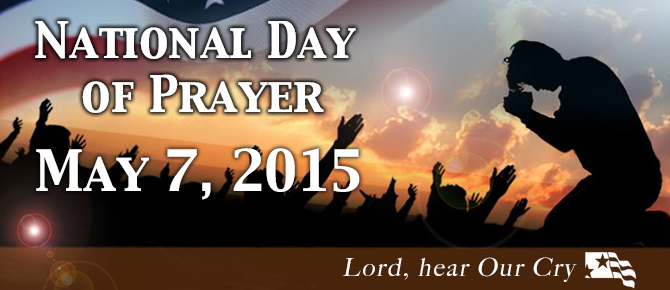
National Day of Prayer

national-day-of-prayer

Today is National Day of Prayer. It’s a good time for me to post my personal favorite prayer. But since I have quite a few, I thought, what the heck, why not post all of them? 🙂

Grant me, O Lord, a mind to know you, a heart to seek you, wisdom to find you, conduct pleasing to you, faithful perseverance in waiting for you, and a hope of finally embracing you.

St. Thomas Aquinas

 Let us therefore give ourselves to God with a great desire to begin to live thus, and beg him to destroy in us the life of the world of sin, and to establish his life within us.

St. John Eudes

Say to him: Jesus, look upon the stones, the thorns,and the weeds that I have, but look also upon this small piece of ground that I offer to you so that the seed may enter my hearts.

Allow it to grow, and God will nurture it.

Pope Francis

Search me, O God, and know my heart; test me and know my anxious thoughts. Point out anything in me that offends you, and lead me along the path of everlasting life.

Psalm 139:23-24

Why am I discouraged? Why is my heart so sad? I will put my hope in God! I will praise him again – My Savior and My God! 

Psalm 42:5

Have patience with all things, but chiefly have patience with yourself. Do no lose courage in considering your own imperfections but instantly set about remedying them. Everyday begin the task anew. 

St. Francis de Sales

Fit In Your Faith Today: Take 5 minutes to pray on this National Day of Prayer. Pick one or a few or even all of the prayers I listed above or seek out your own favorite prayer. Offer it up to someone that needs your intention today. You could pray for the leaders in office, you could pray for someone in your family or a close friend, you could pray for the Nepal earthquake victims or you could pray for a certain social justice issue to be resolved. As they saying goes, “Pray for those who don’t believe in Jesus. They need it the most.”

The Four Nonnegotiable Pillars of the Spiritual Life

Excerpt from The Holy Longing: The Search for a Christian Spirituality

Four essential pillars undergird any healthy Christian spirituality. These are universally prescribed spiritual challenges and are revealed by Christ as being nonnegotiable elements within Christian discipleship. What are they?

We see that Jesus was prescribing four things as an essential praxis for a healthy spiritual life: 

a) Private prayer and private morality

b) social justice

c) mellowness of heart and spirit

d) community as a constitutive element of true worship 

These are not elements we may choose or not choose to incorporate within our spiritual lives. They comprise the essence of the spiritual life. They also supply its balance. Only when all four of these are present in our lives are we healthy, as Christians and as human beings.

We can spend our whole life trying to live out all 4 of these pillars without 100% success. But the point of this section of the book is to understand that if we call ourselves Christians, THIS is what Jesus wants us to strive for. The Christian who has all 4 of these things present in their spirituality, they are the living the ideal Christian life. Chances are, though, that we are lacking in at least one of the 4 areas.  I know I certainly am, especially the part about social justice. But there’s hope! We can identify this absence and work on incorporating it into our lives.

For example, let’s say you’re like me and you do everything listed above except you do not have a passion for social justice. You aren’t the type to sign petitions or stand in front of a courthouse holding a sign or perhaps you don’t feel you are outgoing enough to take a stand. You can fix that by joining a group at your church that holds vigils outside abortion clinics or a group that helps the homeless by taking them meals at local shelters. You don’t have to be on the “front lines” to still take part in social justice. Personally, I was always pro-life in my mind but I never vocalized this opinion to too many people. Recently, and especially after reading Theology of the Body, I am very adamant and quite passionate about preventing abortions in society today. I also look at issues like human trafficking and capital punishment in a different light. Understanding that Jesus wants us to stand up for what He believed and what we as Christians believe has ignited a fire in me to take action.

You might recognize that you are passionate about social justice issues, you have mellowness of heart and spirit, and you pray everyday privately and you obey the commandments. However, you might be the kind of person that doesn’t actually go to church. (Letter D above). You might not “believe” in it. Some people think, “I don’t want to be among all those hypocrites,” or “I prefer to worship in private.”  Here are the authors thoughts on this:

The grounding, earthiness, and necessary pain that only real involvement within a concrete, parish-type family can give you [is what is missing from the life of a person who does not attend a church]. In parishes, we do not get to pick who we will be standing beside as we worship and celebrate various things together. A parish-type family is a hand of cards that is randomly dealt to us, and precisely to the extent that it is truly inclusive, will include persons of every temperament, ideology, virtue, and fault. Also, church involvement, when understood properly, does not leave us the option to walk away whenever something happens that we do not like. It is a covenant commitment, like a marriage, and binds us for better and worse. 

Fit in Your Faith Today: Examine these 4 Pillars  and ask yourself where you are lacking.  Pick up a copy of the book if this peaks your interest and you want to learn more! This exercise isn’t meant to make you feel inadequate or guilty. It’s meant to enhance your relationship with God and examine your spirituality as a Christian. It’s changing my life for the better; think about what it can do for you and for others!

Do You Desire Holiness?

This is an excerpt taken from Patty Schneier’s talk “Prove it, God…and He did!”

Do I desire holiness? Do I even want it? Do I search for holiness in my life?

Do you search for holiness like a mother would search for her missing child?

Do you struggle for holiness as if your head were being held underwater, how that person would struggle and fight to come up for air with every ounce of his being? Do you struggle for holiness like that?

Holiness is being nothing more than what God intended me to be in my everyday life.

How can one become more holy in their day to day life? It starts with prayer.

A day without quiet, reflective, meditative prayer time everyday makes you spiritually dead.

Just take the daily readings of the church and unite your prayer time with Catholics all over the world and ask yourself “What does God want to say to me today?”

Holiness begins right here and right now. That’s your challenge. Not, “When my kids are grown or starting school.” Not, “As soon as we move into our new house.” or not “next year or next week.” You start your quest for holiness NOW.

Get a reflection or guidebook to help explain these readings so you’re not just guessing at their meaning.

Make a resolution – Pick one thing to think about, pray about, or do each day that will take you one step closer to living a holy life.

As busy as you may be, there is always time to pray. How much time a day do you dedicate to God? Is 30 minutes a day too much to ask?

Fit in Your Faith Today: Your challenge is the same as what was presented to Patty – Daily reflective meditative prayer is key to becoming closer to God. Without prayer, we are “spiritually dead.” Instill in your life this quiet time everyday. You’ll be surprised at how much your life will change after just a few weeks of this routine. If you already pray everyday, there is still no such things as praying too much. 🙂 Adoration, praying the rosary, reading spiritual literature, praying the Examen, bible studies, evangelizing, etc are more ways to seek a closer relationship with God as well.

Selfless Desire

Selfless desire for the other’s true good is called benevolence in love. If love as desire says, “I long for you AS a good,” love as benevolence says “I long for YOUR good,” and “I long for that which is good for you.”

Love as desire is not itself a problem or a defect; it is merely incomplete. It must be balanced out with love as benevolence.

The person who truly loves longs not only for his or her own good, but for the other person’s good, and he does with no ulterior motive, no selfish consideration. The is the purest form of love, and it brings the greatest fulfillment.

-Christopher West, Fill These Hearts: God, Sex, and The Universal Longing

Fit In You Faith Today: Have you ever experienced benevolence in love? You have if you’ve ever loved someone so much, that you pray that they receive what is good for them, what is best for them, even if it doesn’t include YOU. It’s selfless desire. A good example is loving someone you wish to marry. But they don’t share the same feelings for you. You then desire that they end up with someone that will be good and healthy for them. As much as you would desire to be with them, you know in your heart they would be better served with someone (or some thing else). That’s selfless. That’s benevolence in action.

Fill Yourself with Good Things

Luke 1:53

“He has filled the hungry with good things.”

Such a short sentence to reflect on today! You might think it doesn’t mean too much other than God provides us with good things. But I think you can read and reflect on this in a number of ways.

My first observation was on the word “hungry.” This is mainly because as of now, it’s time for me to eat being almost lunch time. Also, I’m currently dieting for a fitness competition so food is on my mind a lot these days.

But did you ever think about how we feed our souls and our minds?

I think about this a lot; we feed on what we see and hear everyday. Something as simple as a movie or a song that we hear or watch. We feed on the words of our friends and co-workers. We feed on what we hear and see and look at everyday.

This is why it’s very important to our faith that we “consume” as much of the Word as we can each day. It leaves little room for the rest of the “anti-Word” to enter our minds and bodies.

You can think of the Word as all the good things God provides to us; good healthy nourishing food of course, but scripture and God’s loving words are good for the soul. What else can we feed on that’s “good?”

  • Uplifting songs on the radio and on our ipod’s
  • Volunteering/stewardship for organizations and causes that need help
  • Positive images in magazines and in advertisements (or simply trashing the trashy ones)
  • Motivational videos on social media and TV
  • Following and reading blogs and organizations that have a “good” theme

How can we avoid or abstain from the “anti-Word” things? (This doesn’t mean REPRESSING our feelings or even AVOIDANCE but it does mean making an effort to surround yourself with “Good” things)

  • When shopping, only purchase what you budget for
  • Avoid the candy/junk food aisle if you know that you can easily be swayed and “cheat”
  • Change the channel on the radio/tv when you know something is coming on that you have no desire to watch/that might make you feel depressed or angry
  • Read books (besides the Bible) that explore theology or are faith based; books that might help you learn instead of escape

Fit In Your Faith Today: What do you “consume” that you know isn’t provided by God? Do you purposely seek out these “anti-Word” items? How can you seek out the “Good” in an effort to become less tempted to consume the “anti-Word” messages/items?

This is probably not an overnight process. This will be a journey for most that might take a long time.

Here are some authors/books that I have found particularly helpful:

Made to Crave by Lysa TerKeurst

Fill These Hearts: God, Sex, and the Universal Longing by Christopher West

What Are You Hungry For? By Deepak Chopra

The Rhythm of Life: Living Every Day with Passion and Purpose by Matthew Kelly