You Don’t Need A Bible To Evangelize

From The Holy Longing by Ronald Rolheiser:


The task of taking God to others is not that of handing somebody a Bible or some religious literature, but of transubstantiating God, the way we do with the food we eat. We have to digest something and turn it, physically, into the flesh of our own bodies so it becomes part of what we look like. If we would do this with the word of God, others would not have to read the Bible to see what God is like, they would need only to look at our faces and our lives to see God.


Fit In Your Faith Today: When was the last time someone asked you why you are a Christian? Or why you go to mass? Do you think others find you unapproachable when it comes to asking these questions? As the passage above suggests, we wouldn’t even need to hand out reading materials to anyone who questions our faith, they would just need to see the way we treat people, the way we spend our free time, the ways in which we interact with those less fortunate, etc., to see where and how God is a part of our lives.  Think of ways you can show how God is at work in your life by putting your faith into action.

For those who have lost a loved one…

From The Holy Longing by Ronald Rolheiser

“Just as Mary Magdala did not find Jesus in his tomb, we too will not find our loved ones there. Where will we find them? We will meet the ones we can no longer touch when we put ourselves in situations where their souls once flourished. Our loved ones live where they have always lived and it is there that we will find them.

Simply put, we find our deceased loved ones by entering into life, in terms of love and faith, in the way that was most distinctive to them. We contact them and connect ourselves to them when, in our own lives, we shape the infinite richness of God’s life and compassion in the way that they did, when we pour ourselves into life as they did.

Every good person shapes the infinite life and compassion of God in a unique way. When that person dies, we must seek him or her among the living.

Thus, if we want a loved one’s presence we must seek him or her out in what was most distinctively him or her, in terms of love, faith, and virtue. If your mother had a gift for hospitality, you will meet her when you are hospitable; if your friend had a passion for justice, you will meet him when you give yourself over to the quest for justice; if your aunt had a great zest for life, for meals with her family, and for laughter in the house, you will meet her when you have a zest for life, eat with your family, and have laughter in your house.

That is how a Christian searches for his or her loved ones after they have died. Theists visit graves (and Christians too visit graves because we are also theists) but, given the incarnation, given that we are all part of the word becoming flesh, as Christians, we search for our deceased loved ones outside of cemeteries, among the living— at our tables, in our places of work, and in the decisions, great and small, that we must daily make.”

Fit in Your Faith Today: How do you “revisit” your lost loved ones? When was the last time you engaged in something that made you think of him/her? Besides visiting the grave, what else can you do, after reading this passage, that keeps the memory of your loved one alive?

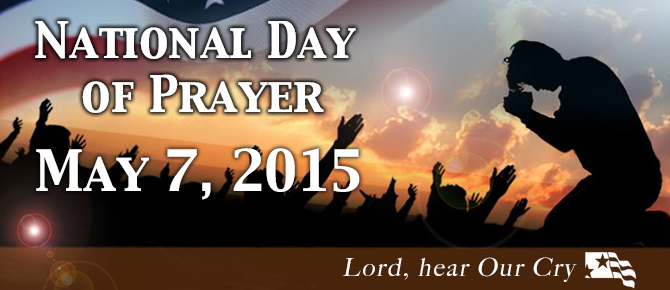
National Day of Prayer

national-day-of-prayer

Today is National Day of Prayer. It’s a good time for me to post my personal favorite prayer. But since I have quite a few, I thought, what the heck, why not post all of them? 🙂

Grant me, O Lord, a mind to know you, a heart to seek you, wisdom to find you, conduct pleasing to you, faithful perseverance in waiting for you, and a hope of finally embracing you.

St. Thomas Aquinas

 Let us therefore give ourselves to God with a great desire to begin to live thus, and beg him to destroy in us the life of the world of sin, and to establish his life within us.

St. John Eudes

Say to him: Jesus, look upon the stones, the thorns,and the weeds that I have, but look also upon this small piece of ground that I offer to you so that the seed may enter my hearts.

Allow it to grow, and God will nurture it.

Pope Francis

Search me, O God, and know my heart; test me and know my anxious thoughts. Point out anything in me that offends you, and lead me along the path of everlasting life.

Psalm 139:23-24

Why am I discouraged? Why is my heart so sad? I will put my hope in God! I will praise him again – My Savior and My God! 

Psalm 42:5

Have patience with all things, but chiefly have patience with yourself. Do no lose courage in considering your own imperfections but instantly set about remedying them. Everyday begin the task anew. 

St. Francis de Sales

Fit In Your Faith Today: Take 5 minutes to pray on this National Day of Prayer. Pick one or a few or even all of the prayers I listed above or seek out your own favorite prayer. Offer it up to someone that needs your intention today. You could pray for the leaders in office, you could pray for someone in your family or a close friend, you could pray for the Nepal earthquake victims or you could pray for a certain social justice issue to be resolved. As they saying goes, “Pray for those who don’t believe in Jesus. They need it the most.”

The Four Nonnegotiable Pillars of the Spiritual Life

Excerpt from The Holy Longing: The Search for a Christian Spirituality

Four essential pillars undergird any healthy Christian spirituality. These are universally prescribed spiritual challenges and are revealed by Christ as being nonnegotiable elements within Christian discipleship. What are they?

We see that Jesus was prescribing four things as an essential praxis for a healthy spiritual life: 

a) Private prayer and private morality

b) social justice

c) mellowness of heart and spirit

d) community as a constitutive element of true worship 

These are not elements we may choose or not choose to incorporate within our spiritual lives. They comprise the essence of the spiritual life. They also supply its balance. Only when all four of these are present in our lives are we healthy, as Christians and as human beings.

We can spend our whole life trying to live out all 4 of these pillars without 100% success. But the point of this section of the book is to understand that if we call ourselves Christians, THIS is what Jesus wants us to strive for. The Christian who has all 4 of these things present in their spirituality, they are the living the ideal Christian life. Chances are, though, that we are lacking in at least one of the 4 areas.  I know I certainly am, especially the part about social justice. But there’s hope! We can identify this absence and work on incorporating it into our lives.

For example, let’s say you’re like me and you do everything listed above except you do not have a passion for social justice. You aren’t the type to sign petitions or stand in front of a courthouse holding a sign or perhaps you don’t feel you are outgoing enough to take a stand. You can fix that by joining a group at your church that holds vigils outside abortion clinics or a group that helps the homeless by taking them meals at local shelters. You don’t have to be on the “front lines” to still take part in social justice. Personally, I was always pro-life in my mind but I never vocalized this opinion to too many people. Recently, and especially after reading Theology of the Body, I am very adamant and quite passionate about preventing abortions in society today. I also look at issues like human trafficking and capital punishment in a different light. Understanding that Jesus wants us to stand up for what He believed and what we as Christians believe has ignited a fire in me to take action.

You might recognize that you are passionate about social justice issues, you have mellowness of heart and spirit, and you pray everyday privately and you obey the commandments. However, you might be the kind of person that doesn’t actually go to church. (Letter D above). You might not “believe” in it. Some people think, “I don’t want to be among all those hypocrites,” or “I prefer to worship in private.”  Here are the authors thoughts on this:

The grounding, earthiness, and necessary pain that only real involvement within a concrete, parish-type family can give you [is what is missing from the life of a person who does not attend a church]. In parishes, we do not get to pick who we will be standing beside as we worship and celebrate various things together. A parish-type family is a hand of cards that is randomly dealt to us, and precisely to the extent that it is truly inclusive, will include persons of every temperament, ideology, virtue, and fault. Also, church involvement, when understood properly, does not leave us the option to walk away whenever something happens that we do not like. It is a covenant commitment, like a marriage, and binds us for better and worse. 

Fit in Your Faith Today: Examine these 4 Pillars  and ask yourself where you are lacking.  Pick up a copy of the book if this peaks your interest and you want to learn more! This exercise isn’t meant to make you feel inadequate or guilty. It’s meant to enhance your relationship with God and examine your spirituality as a Christian. It’s changing my life for the better; think about what it can do for you and for others!

Do You Desire Holiness?

This is an excerpt taken from Patty Schneier’s talk “Prove it, God…and He did!”

Do I desire holiness? Do I even want it? Do I search for holiness in my life?

Do you search for holiness like a mother would search for her missing child?

Do you struggle for holiness as if your head were being held underwater, how that person would struggle and fight to come up for air with every ounce of his being? Do you struggle for holiness like that?

Holiness is being nothing more than what God intended me to be in my everyday life.

How can one become more holy in their day to day life? It starts with prayer.

A day without quiet, reflective, meditative prayer time everyday makes you spiritually dead.

Just take the daily readings of the church and unite your prayer time with Catholics all over the world and ask yourself “What does God want to say to me today?”

Holiness begins right here and right now. That’s your challenge. Not, “When my kids are grown or starting school.” Not, “As soon as we move into our new house.” or not “next year or next week.” You start your quest for holiness NOW.

Get a reflection or guidebook to help explain these readings so you’re not just guessing at their meaning.

Make a resolution – Pick one thing to think about, pray about, or do each day that will take you one step closer to living a holy life.

As busy as you may be, there is always time to pray. How much time a day do you dedicate to God? Is 30 minutes a day too much to ask?

Fit in Your Faith Today: Your challenge is the same as what was presented to Patty – Daily reflective meditative prayer is key to becoming closer to God. Without prayer, we are “spiritually dead.” Instill in your life this quiet time everyday. You’ll be surprised at how much your life will change after just a few weeks of this routine. If you already pray everyday, there is still no such things as praying too much. 🙂 Adoration, praying the rosary, reading spiritual literature, praying the Examen, bible studies, evangelizing, etc are more ways to seek a closer relationship with God as well.

Selfless Desire

Selfless desire for the other’s true good is called benevolence in love. If love as desire says, “I long for you AS a good,” love as benevolence says “I long for YOUR good,” and “I long for that which is good for you.”

Love as desire is not itself a problem or a defect; it is merely incomplete. It must be balanced out with love as benevolence.

The person who truly loves longs not only for his or her own good, but for the other person’s good, and he does with no ulterior motive, no selfish consideration. The is the purest form of love, and it brings the greatest fulfillment.

-Christopher West, Fill These Hearts: God, Sex, and The Universal Longing

Fit In You Faith Today: Have you ever experienced benevolence in love? You have if you’ve ever loved someone so much, that you pray that they receive what is good for them, what is best for them, even if it doesn’t include YOU. It’s selfless desire. A good example is loving someone you wish to marry. But they don’t share the same feelings for you. You then desire that they end up with someone that will be good and healthy for them. As much as you would desire to be with them, you know in your heart they would be better served with someone (or some thing else). That’s selfless. That’s benevolence in action.

Where God Lives

26 August (1941) Tuesday Evening

There is a really deep well inside me. And in it dwells God. Sometimes I am there too. But more often stones and grit block the well, and God is buried beneath. Then (God) must be dug out again.

I imagine that there are people who pray with their eyes turned heavenwards. They seek God outside themselves. And there are those who bow their head and bury it in their hands. I think that these seek God inside.

Etty Hillesum – Letters from Westerbork

Etty Hillesum has been called the adult counterpart to Anne Frank. Etty kept a diary and wrote letters while she was a prisoner at Auschwitz. She died at the age of 29 there. But her letters remain “a stunning achievement of the human spirit,” as one critic called them.

Even in the shadow of the Holocaust, she still found life meaningful. (For more on Etty’s insights, pick up a copy of “An Interrupted Life and Letters from Westerbork.”)

Fit In Your Faith Today: When faced with uncertainty, do you still pray to God as if He is inside you or do you assume He has left you? Imagine a place within you where God lives. What does this place look like?

Theology of the Body

Christopher West is one of the most recognized teacher of John Paul II’s Theology of the Body.

What is the Theology of the Body? Check out this explanation here.

In the meantime, here are some of what I refer to as “nuggets of wisdom” from his book “Theology of the Body for Beginners.”

(If you are interested in learning more about the Catholic teaching of marriage, the human body, sexuality, and love, I highly recommend picking up one of West’s books. They are life-changing.)

  • God gave us sexual desire as the fuel of a rocket that is meant to launch us into the stars & beyond. But what would happen if the engines became inverted, pointing us back only upon ourselves & no longer toward the stars? It would be a massive blast of self destruction.
  • This is the purpose of sexual union in the divine plan: To prefigure in some way the glory, ecstasy, and bliss that awaits us in heaven.
  • When our desire to understand the body and sexuality is not met with the truth, we inevitably fall for the lies.
  • The difference between marriage and celibacy must NEVER be understood as the difference between having a “legitimate” outlet for sexual lust on one hand and repression on the other. No, Christ calls Everyone, no matter his or her particular vocation, to experience redemption from the domination of lust. Both vocations, celibacy and marriage, flow from the same experience of the redemption of sexual desire.
  • Celibacy and Marriage complement each other. Celibacy helps married couples realize that their love also is oriented toward “the kingdom.” Furthermore, by abstaining, celibates demonstrate the GREAT VALUE of sexual union.
  • Celibacy for the kingdom is meant to be a fruitful, living out of the redemption of sexual desire, understood as the desire to make oneself a “sincere gift” for others.
  • Purity does not reject the body, It is the glory of the human body before God. It lets us perceive the human body – ours and our neighbors – as a temple of the Holy Spirit, a manifestation of divine beauty.
  • Spousal love is the love of total self-donation. The power to express love, preciselyt that love in which the human person becomes a gift, fulfills the very meaning of his being and existence. If you’re looking for the meaning of life, it is impressed right in your body, in human sexuality.

Fit In Your Faith Today: Take just one of these statements and reflect on it. (It helps to have the context surrounding it from the book itself, which is why it’s highly recommended you purchase one of his books.) But in the meantime, ask yourself some of these thought provoking questions:

Do you think of your body as a gift from God, as a holy temple? Do you treat it as such?

Do you think of yourself as holy?

What is your definition of holiness?

Do you believe that God calls us all to a vocation of holiness? (He does, by the way.) 😉

Do you look at marriage as a sacrament? Do you regard marriage as a holy union?

What do you think of people who are celibate?

What words come to mind when you hear that word?

If you have any confusion or questions about what the Catholic faith says about sexuality, purpose of marriage and life, lust, love, union, relationships, etc., I can guarantee this book explains A LOT. You cannot possibly NOT grow in your faith after researching and reading Theology of the Body.


The Best Quotes About Lent

The practice of Lent

Matthew 6:1 Jesus said, “Beware of practicing your piety before others in order to be seen by them; for then you have no reward from your Father in heaven.”

Pope Benedict XVI: “Lent is like a long ‘retreat’ during which we can turn back into ourselves and listen to the voice of God, in order to defeat the temptations of the Evil One. It is a period of spiritual ‘combat’ which we must experience alongside Jesus, not with pride and presumption, but using the arms of faith: prayer, listening to the word of God and penance. In this way we will be able to celebrate Easter in truth, ready to renew the promises of our Baptism.”

Mother Teresa: “As Lent is the time for greater love, listen to Jesus’ thirst…’Repent and believe’ Jesus tells us. What are we to repent? Our indifference, our hardness of heart. What are we to believe? Jesus thirsts even now, in your heart and in the poor — He knows your weakness. He wants only your love, wants only the chance to love you.”

Pope Francis: “Live your Lent as if there is no Easter.”

“No act of virtue can be great if it is not followed by advantage for others. So, no matter how much time you spend fasting, no matter how much you sleep on a hard floor and eat ashes and sigh continually, if you do no good to others, you do nothing great.” – John Chrysostom

Fr. Robert Barron: “Jesus, having resisted these temptations from the devil in the desert for 40 days, is now ready to make God the center of His life. This, too, is our purpose during Lent.”

Prayer:

Matthew: 6: 5-6 “And whenever you pray, do not be like the hypocrites; for they love to stand and pray in the synagogues and at the street corners, so that they may be seen by others. Truly I tell you, they have received their reward. But whenever you pray, go into your room and shut the door and pray to your Father who is in secret; and your Father who sees in secret will reward you.”

Martin Luther: “To be a Christian without prayer is no more possible than to be alive without breathing.”

Paul E. Billheimer: “Satan does not care how many people read about prayer if only he can keep them from praying.

Various Priests and Deacons: “Pray in your car, it’s the perfect setting. You’re alone, you’re forced to slow down when you’re stuck in traffic. Begin a conversation with God right there.”

St John Damascene: “Prayer is the raising of one’s mind and heart to God or the requesting of good things from God.”

Fasting:

Matthew 6:16 “And whenever you fast, do not look dismal, like the hypocrites, for they disfigure their faces so as to show others that they are fasting. Truly I tell you, they have received their reward. But when you fast, put oil on your head and wash your face, so that your fasting may be seen not by others but by your Father who is in secret; and your Father who sees in secret will reward you.

Pope Francis suggests we fast from indifference to others:  “Indifference to our neighbor and to God also represents a real temptation for us Christians. Each year during Lent we need to hear once more the voice of the prophets who cry out and trouble our conscience.”

Fr. Robert Barron: “The pleasures of the body sometimes dominate and take over – so we fast from them purposely so as to allow the deeper hungers to arise and emerge.”

John Piper, Author of A Hunger For God: “Christian fasting, at its root, is the hunger of a homesickness for God.”

Almsgiving:

Matthew 6: 2-4 “So whenever you give alms, do not sound a trumpet before you, as the hypocrites do in the synagogues and in the streets, so that they may be praised by others. Truly I tell you, they have received their reward. But when you give alms, do not let your left hand know what your right hand is doing, so that your alms may be done in secret; and your Father who sees in secret will reward you.”

Father Robert Barron: We all have too many material things. Here are 3 ways you can express almsgiving:

  • When you receive something in the mail and it is requesting money, donate to that cause.
  • If you see a homeless person who asks you for money, give them something (does not have to be money).
  • When you want to buy something, take a look at what you would consider your first choice. Then buy the model or the version just beneath it/less expensive than your top choice. Use the money that’s the difference between those two and give it to the poor.

Mike Aquilina – Catholic Education Resource Center: Almsgiving is a form of prayer because it is “giving to God” — and not mere philanthropy. It is a form of fasting because it demands sacrificial giving — not just giving something, but giving up something, giving till it hurts.

Book of Tobit 12:8-9: “Prayer and fasting are good, but better than either is almsgiving accompanied by righteousness … It is better to give alms than to store up gold; for almsgiving saves one from death and expiates every sin. Those who regularly give alms shall enjoy a full life.”

Fit in Your Faith Today (and this Lenten Season): Practice the 3 aspects of Lent – Perhaps you take just one a day. Which one do you need the most help with? Do you find that you aren’t giving to the poor enough when it’s NOT Lent? Work on how you can give to those less fortunate, even if it’s not monetarily.

Do you go about your day skipping prayers and forgetting to give thanks to God? Arise every morning with a short prayer of thanksgiving.

What do you have too much of that you can fast from this Lent? It could be food, it could be social media, or it could be a certain bad behavior/habit you have been meaning to cease.

Is 46 days too much to ask to abstain and use that time/energy/money on something for your community of fellow Christians? Start your Lent off on the right foot and start a calendar or write down in a journal how and what you’re going to accomplish this Lent. At Easter, note how closer you have come to putting God first in your life.